|
|
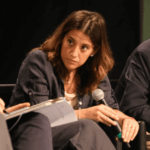
Martina Cagossi is a criminal lawyer based in Milan, Italy. She is the co-founder and Program Manager...

Mark Olshaker is a journalist, nonfiction writer, novelist and Emmy-award winning documentary filmmaker With former Special Agent...

Justin Brooks is a Professor at University of San Diego School of Law. He was the Co-Founder...

Michael Semanchik is the Executive Director of The Innocence Center (TIC), a formidable national legal institution dedicated...
| Published: | September 23, 2025 |
| Podcast: | For The Innocent |
| Category: | Access to Justice , News & Current Events , True Crime |
To this day, some still believe Amanda Knox is guilty of the horrific murder of Meredith Kercher in 2007. However, this belief appears to stem entirely from the wildly sensational media coverage surrounding her supposed involvement. Thorough examination of the facts of the case have clearly shown that Amanda was wrongfully convicted of this terrible crime.
This time on For the Innocent, Michael Semanchik welcomes a panel of experts to explore how Amanda Knox’s case gained such incredible notoriety and how the truth was obscured by a series of mistakes, assumptions, and media distortion.
Michael is joined by Martina Cagossi, Justin Brooks, and Mark Olshaker to walk listeners through the facts of the case, explain the prevalence of false confessions in high-stress situations, and discuss how Amanda’s “trial by media” ultimately overshadowed clear evidence that should have set her free.
🎧 Listen Amanda’s Story on Apple, Spotify, Youtube, or your favorite podcast app.
Justin Brooks:
Want somebody please free.
Michael Semanchik:
Welcome to For the Innocent. I’m Michael Semanchik, executive Director of the Innocent Center. At the Innocent Center, we are dedicated to freeing the innocent from prison, educating the public on the causes of wrongful conviction and assisting freed clients as they reenter society. Our latest episode featured the story of Amanda Knox, her wrongful conviction and her fight to reframe her life story. Today we looked deeper at the situation in circumstances that landed her in an Italian prison and how she eventually earned her freedom. Joining me to discuss Amanda’s case are my distinguished guests. Martina Cagossi is an Italian journalist, lawyer and advocate for the Italy Innocence Project. Mark Olshaker is a renowned crime author who regularly teams up with FBI profiler John Douglas. He’s written extensively about some of the most notorious cases, including Amanda Knox. Justin Brooks is the co-founder of the California Innocence Project, a board member of the Innocence Center, and a professor of practice at University of San Diego School of Law. He is one of the foremost experts on wrongful convictions and has helped launch dozens of innocence organizations around the world. Welcome everyone. I’m honored to have you join me. Thank.
Martina Cagossi:
Thank you. Thank you.
Michael Semanchik:
So starting off, I want to jump right in and ask you, Martina, since you probably had some of the earliest exposure to this case, talk to us about what it was like on the ground in Italy when Amanda was first arrested.
Martina Cagossi:
Well, to be clear, I knew Amanda, I firstly met Amanda when she had been already released for prison and recently, let’s say we are working, we are supporting her together with her, let’s say, historical lawyer within the allegation, the conviction she got from this lander allegations. But I perfectly remember I was a law student when the murder happened, and I perfectly remember how the case was covered and was in all media in Italy. And of course everybody in Italy at that time believed that they had cooked the right people. So including Amanda and Rafael,
Michael Semanchik:
Was the coverage similar in this case as it is in other cases in Italy? Is it always that the media kind of does this?
Martina Cagossi:
I mean, Italian media are quite passionate on murder cases. This one was peculiar, let’s say, because of the international perspective and profiles both of the victim and one of the defendants. And so the fact that there was also, let’s say an international coverage at media level for sure, it was more covered than other murder cases. Also because at the beginning it seemed that the perception was that, okay, they got them case closed, and then Rafael and Amanda, let’s say recounted immediately, or let’s say they claimed that their innocence also the trial was very extensively covered, especially when they got the first conviction and then the Court of appeal overturned the conviction. And so I perfectly remember that today because the Italian media were surprised, let’s say on the overturning. And then she flew back to the United States. And so there were some people that say, oh yes, sure, she’s America, she’s coming home, she’s getting away with murder. And then there was the first Italian Supreme Court decision that overturned the quit, and then the case started again. And so everybody was talking about this case basically. And I met Amanda when she was waiting at the last, let’s say judgment. That was the 2015 one
Michael Semanchik:
From the Italian Supreme of the Italian Supreme, the final decision Supreme Court,
Martina Cagossi:
Yeah, the final decision. And then of course, media covered that story and everybody was convinced that she actually went away with the murder allegation. I dunno if my English is enough clear on this, but at that time, everybody thought that, okay, she was lucky in some way. Okay,
Michael Semanchik:
So there’s still that sentiment that she did it and she got away with it. Would you say that’s still true today?
Martina Cagossi:
I was getting there because the final acquittal decision was in 2015, and that was approximately the time I met Amanda. And we became good friends also for the Innocence Network and all the engagement, my organization that I ran with Professor Lu, and we met every year. And in 2019, I remember we were taking some coffee during an Innocence conference and say, well, we are organizing the first edition of the Italian Criminal Justice Festival, and we are going to deal with wrongful conviction and trial by media, and you should come. And she say, why not? And okay, and yeah, it was this crazy idea, and Justin remember this because I invited him. And that was a shocking experience for me, not only for the organizational staff and those months I remember as the craziest of my life because I had a bunch of journalists that call me every day. But I remember perfectly the perception that even after four years, the acquittal got fine and the majority of Italian people and Italian media called us and say, you are inviting to a conference, a murder.
Michael Semanchik:
I want to jump over and ask Justin, what was it like to go with Amanda on that return trip to Italy, and this is her first time back since the acquittal?
Justin Brooks:
Yeah, I mean, it was, as Martina said, it was completely surreal. I’ve dealt with the media my whole career through many cases you and I have done together, Mike, and it was nothing like anything I’d seen before, just the media following us everywhere and cars chasing down with motorcycles. One of the craziest things I remember was Amanda came in, she gave this beautiful hour long speech in Italian explaining the case going through it all, and all the media were lined up with 50 cameras all pointed at her. They had all this footage of her, all this opportunity, but as soon as she walks out the door, they all just come running at her. And we had to basically knock a couple of reporters out of the way to get into our car and had to stay out at a secret location. It was really surreal to see that and the British media Martinez talking about the Italian media, but the British media seemed to be the worst, at least from my perspective. They were super aggressive. They’ve been terrible throughout this case and how they’ve portrayed it. And that’s why I’m, I’m in England today and there’s still people in Britain like Italy who think she’s guilty. And it’s all based on the perceptions from the media because anyone who looks into the case that the actual facts and studies, it realizes that she’s innocent.
Michael Semanchik:
As you were saying that I was having flashbacks to Princess Diana. Honestly, it
Justin Brooks:
Was like exactly, that is exactly what it felt like having actual reporters chasing you down the street. It’s really weird. It looks more fun than it is when you’re inside it.
Michael Semanchik:
Nothing about it looks fun to me.
Justin Brooks:
It looks fun when the Beatles at it, but it’s not that fun.
Michael Semanchik:
So Mark, you’ve done a lot of reviews of some of the most notorious cases. You’ve written a lot about them and you’ve coauthored several books with John Douglas, FBI profiler. What does Amanda’s case have that’s different from the other cases that you’ve written about? What makes it so special?
Mark Olshaker:
Well, what makes it special is just as Justin said, the media attention was profound. And people say, well, if she hadn’t been a pretty American girl and Meredith Kercher the victim hadn’t been a pretty English girl, would this case have gotten the kind of notoriety it did? And I say, well, if they hadn’t been that she may not have been charged at all. I mean, this was just a total example of confirmation bias. And I have to be honest, when I first heard about the case, I thought, wow, this is fascinating. A very attractive couple, one American and one Italian. They have this sex graze Satanic ritual murder. Wow, that’s a great story. And then when we decided to write about it, we started looking into it and got all the evidence as much as we could amass. And I said, this is not this at all.
I mean, this is an open and shut case. And I think the thing that’s kind of frustrated John and I about the entire case is it was pretty obvious. And I give a lecture called Better Than the Truth, and unfortunately, this is a case where the story that was promulgated was much better than the truth. I mean, it was obvious what happened. And I frankly just was confounded by the mistakes and wrong directions that the Italian investigators and prosecutors went through. First of all, I mean just the assumptions that they made plus all the interrogation. And I’ve often said, and Justin, I’m sure you agree with me, you give me enough time and enough manpower, I can get anybody to admit that they were abducted by aliens. I mean, it’s not that hard, which is why false confessions are so problematic. But I’ve said to both Amanda and Rapha individually, if you committed the murder and then came over the next morning with a mop and a bucket of bleach and were able to erase all of your own invisible DNA and keep only Raphael Gades invisible DNA, then you both deserve the Nobel Prize for chemistry because that it’s impossible.
And I just thought the prosecution’s assertions and their theory of the case and their narrative of it was so bizarre that it just made no sense.
Michael Semanchik:
Mark, did you get to that point, that sort of a feeling on the case before the DNA testing had come back? I mean, they had done all the interviews and they got the confessions and whatnot, but the strongest DNA evidence didn’t come out for a couple of years, right?
Mark Olshaker:
Yeah. I mean, we had the original, which was if you’re referring to the DNA on the Brock clasp, but Greg Heian, another member of our team had proved that after six weeks you’re not going to have good DNA evidence. And the theory of transfer really applies here. I just couldn’t understand how many wrong decisions they made. It just as one example, investigator went over to Raphael’s kitchen and picked out a knife that he thought was the one, how did he know investigators? Intuition is what he said, something to that effect. Now it turns out then forensically, the knife didn’t fit all of the wounds on Meredith’s spotty. So they said, okay, well this must be the right one, but there must be another knife and therefore Rafael must had a knife, and we know that he likes to collect knives anyway, so case closed, but that one erroneous decision leading to another just made the whole thing crazy. And Justin, I’m sure from your experience, if a defendant changes the story three or four times, you have to start suspecting that story. Well, when the prosecution changed its theory of the case three or four times, I would think you’d be equally skeptical.
Justin Brooks:
And you make a good point about the knife as we talk about the media because when that knife was discovered that was publicized worldwide, they found the knife, they found the knife, this is the knife, and then they find out later, oh, it’s not the knife. But then that’s not a big headline story again, again, that’s not interesting that it’s not the
Mark Olshaker:
Knife. I always say, if the story is better than the truth, then the evidence is going to come in second place. And I’ve often cited the last line of the famous John Ford film, the Man Who shot Liberty Valance, when James Stewart is telling the story of what really happened with the death of this horrible person, Liberty Valance, James Stewart says to the editor, he’s talking to, well, are you going to print the story? And the editor says, no, this is the West, sir, where the truth becomes legend, print the legend. And unfortunately, that’s exactly what has happened with the media. And understandably, the British media had a tremendous amount of sympathy and empathy for the Kercher family, which they should. But when they get it wrong, you got to make it right.
Justin Brooks:
The other part of the media I think that’s important to talk about is in my experience representing people overseas, it becomes even a bigger deal. We represented the Hong family in Qatar, Jason Peral, the Nicaragua, we’ve had a number of cases of Americans locked up abroad. And when they go to the media and the media starts reporting on the case, there’s a whole political aspect to it that sort of depends on the United States relationship with the country. And what we learned with the Jason Peral case was the United States has no relationship with Nicaragua, so it was very hard to get any help on that case. But what we learned in Qatar with the Hong case was the United States had too many relationships with Qatar. And so nobody wanted to get involved. They didn’t want to hurt the relationship. And I think Amanda is another story of that where Italy and the United States relationship is very important. I think Martina could talk to that.
Mark Olshaker:
Absolutely true, of course, no question.
Justin Brooks:
And so now you, you’ve charged a 19-year-old American girl who’s in college with a murder, and then if you start having doubts about it, you’ve got to start covering your ass. You’ve got to be like, we better make this case stick because we’re going to look really bad and it could have implications for the entire country.
Martina Cagossi:
And if I may add a factor in this case, there are so many things that went wrong. It was the media implication, the interviews I really focused in the past couple of years on the interviews because those interviews and especially Amanda interviews constituted in some way the slander allegations. So I went really into the details of what happened in those nights. And this was something that was, I mean, only studying cases on wrongful conviction in us. I learned about these things because I never thought that in Italy this kind of problems could happen. And indeed they did. They happen.
Mark Olshaker:
And Martina, you have to understand also, you have to keep in mind they kept her awake for extended hours under extreme stress, and something you would very much appreciate was the language barrier.
Martina Cagossi:
Of course, this was exactly the language barrier and the fact that she was not assisted by a lawyer. These pieces led the European Court of human rights to acknowledge that her fundamental rights have been violated. But there is a third aspect that in my view, it’s crucial, is that how the crime scene was analyzed in the very first moments of the murder and the inexperience of the police, the scientific people that went over there and took the samples and everything, this made the case impossible to solve. And the Italian Supreme Court clearly stated this in the 2015 judgment. They say, even if we celebrate dozens of trials, we will never discover how things really went because the crime scene is so deteriorated, it’s so compromised that we have no the time machine. And so no Italian judge, no judge could ever state without any reasonable doubt how things happen in that house.
Mark Olshaker:
And yet the prosecution set up this animated video, which purported to show exactly what, and it was based on nothing.
Michael Semanchik:
Martina, do you think that the way they went about investigating at the crime scene and then the way they went about obtaining the confession and then now looking back, has it had any effect or has there been any systemic change in Italy stemming from this case? Have you seen it get better, or is this still going on?
Martina Cagossi:
Yeah, no, we are getting better, especially on analysis of the crime scenes because the public opinion still thinks that she’s guilty and she went away with the murder. But among, let’s say the technical people, judges, prosecutors, lawyers, that case was studied and covered extensively under a technical point of view because the knife was the knife marker spoken about. It was put in a paper box without any
Mark Olshaker:
Cardboard box. Yeah,
Martina Cagossi:
Exactly. And the bra was left on the ground for I don’t know how many weeks. And so the samples were totally made in a wrong way, and this was a fact. And so nobody can ignore this fact.
Michael Semanchik:
And there were countless people coming and going from the crime scene investigators right over the time. So contamination, and
Justin Brooks:
That’s such an interesting point, Martina, that I think’s worth exploring is the fact that what you’re saying is the experts in Italy, the lawyers, the judges, have all come to accept that this was a wrongful conviction, and yet the general public has not. And I think that’s a real sign of our times of where we are right now, that we’re sort of like experts. Scientists can easily just be dismissed by a 32nd Instagram post that says, this person’s guilty. I believe they’re guilty. Look in her eyes, she’s guilty. And I think that’s part of the story here of what we’re seeing is people don’t necessarily respect experts anymore. In general, whether you’re talking about COVID, global warming, murder cases. I mean, I get so much hate, I can’t even imagine what Amanda goes through because I get so much Amanda hate on my social media and people private messaging me and telling me that I support a murderer and all of this. And you just know they have very little information about the case and are just so comfortable talking to experts and telling them they’re wrong. And that I think is part of the time.
Mark Olshaker:
Justin, you’ve hit on one of the fundamental issues of our time, which is in this age of the internet, everybody is entitled or feels entitled to their own reality. I mean, it’s propitious that we are doing this today because in my other life I do other detective stories which are in public health, and I’ve got a book coming out with the epidemiological expert, Dr. Michael Osterholm on September 2nd called the Big One, preparing for World altering pandemics to Come. And we’ve just had the Secretary of HHS proclaim that they’re going to not do any more research on mRNA vaccines, and he spouts all of these facts, which are not facts. So it is striking, and I think Amanda’s case is just one microcosm of a huge issue just in that you touched on ordinary people who have the forum of a podcast, a blog, whatever. They think that they suddenly know more than the experts and more than people who’ve done research more than people who know how to analyze evidence like the four of us do. And it’s more than disheartening. It’s scary.
Michael Semanchik:
We’ll be right back after this break in Amanda’s case. And in many of these cases, one of the most challenging things for the general public to overcome is why someone would falsely confess. And if you’ve done these cases and you’ve seen it, then you understand it. But from the outside’s perspective, it’s like, why would anyone do that?
Mark Olshaker:
Yeah, in my writing, I’ve compared the Kercher murder with the West Memphis three case where you also had a false confession. And false confessions are easy if you have the right, as I say, the right resources, which is a long time. And a big team, and particularly somebody who, as Martinez said, was totally isolated in so many different ways, it’s not hard to get a false confession. You start to question your own sanity after a point, particularly if you’re sleep deprived.
Michael Semanchik:
And of course you got the age of Amanda at the time, you’re more susceptible to suggestibility. You’ve got these powerful individuals who can keep you in this room forever.
Justin Brooks:
And then she’s overseas away from home. And I think the biggest one in this, which our friend Marty Oloff, I think about all the time,
Mark Olshaker:
Oh yeah.
Justin Brooks:
So Marty’s this teenager who wakes up to this nightmare of his parents being stabbed to death in his apartment. And I think what people don’t think about, and I ask this question all the time when I speak in front of groups, who here thinks they would never confess to a murder they didn’t commit? I always ask him, there’s always several people put their hands up, mostly men, but there’s always a group that will raise their hand to that. And then I try to add to them the component of, you can’t just think of it like you are being interrogated. A lot of times you’ve just gone through the most traumatic event of your life. Exactly. And now you’re being interrogated, and now you’re being kept
Mark Olshaker:
Up all life. If you add that trauma to the situation of just losing her roommate to this bloody murder was the worst thing that ever happened to Amanda,
Justin Brooks:
A 19-year-old kid. And same thing with Marty.
Mark Olshaker:
Well, the complexity in Marty’s situation is the police are allowed to lie in their investigation and in their interrogation, and they say to Marty, essentially, well before your father died, he said you did it. And Marty in total innocence says, well, my father never lied. I mean, if he said That must be true, I must have, and I just blacked out.
Justin Brooks:
Or Ryan Ferguson who was blackout drunk, and then they just keep telling him he did this murder. And eventually he is like, I guess I did. And that’s where I think you can’t really, and in fact, none of us can really do it. I don’t think any of us have ever been subject to a serious interrogation.
Mark Olshaker:
And remember we’re talking about serious authority figures who are doing this.
Justin Brooks:
Yeah. So it’s unthinkable with my students. The closest I get, as I say, remember a time when you stayed up all night, that’s about the only perspective they can bring to it. And I was like, well, now imagine they just told you your parents are dead. And now imagine a police officer’s handcuffed you and put you in a squad car. Now imagine you’re in a small room for hours isolated, but you really can’t put yourself in. And that’s why like Mike is saying, there is this deep cynicism about it because people really can’t actually think what they would do in that situation.
Mark Olshaker:
And Martina, in Amanda’s case, they said, please come with us. You can help us solve the case. Correct.
Martina Cagossi:
Yeah. She was actually, she was Ed to as a witness, this is why she was not with the lawyer, because in Italy, if you are summed to be questioned as a suspect, a lawyer need to come with you. And she was summoned as a witness, potential witness,
Justin Brooks:
Wait a second, I’m learning something new. I don’t think I could learn something new about this case. So you’re saying under Italian law, all they have to do is the police officers say the person’s going to be a witness,
Martina Cagossi:
And now you
Justin Brooks:
Can interview them.
Martina Cagossi:
Then if this person makes self incriminate statements, they needed to stop the interview, call a lawyer, and you are protected by the right to not self incriminate yourself. So it might happen that they are interviewing a witness, and this witness starts self-incriminating himself, and at that point, they are obliged to stop the interview, appoint you a lawyer, and you have the right to remain silent and everything.
Justin Brooks:
So why didn’t that happen? Why didn’t a Amanda get a lawyer?
Martina Cagossi:
They didn’t ended, let’s say the interview because they were so into this and they kept interviewing that. But to be clear, that interview was not used to convict her for murder because almost immediately they realized that that interview could not be used against her as evidence of guilty. That interview those interviews, because there was two, I think constituted the proof, let’s say for this slander conviction. But if you read the judgements that convicted her for murder, the judge could not use against her. Those statements. And then I don’t want to add a complication, but there is a complication, the memorandum, because what happened, and this is something that we are not sleeping about this because also the European Court of Human Rights, they said, okay, her fundamentals rights have been violated because during those interviews, she was not assisted by a lawyer and by her interpreter. But the morning after she asked a paper and a pen, and she wrote down, let’s say a memorandum, a document in English.
So when we first took the European court decision and went back to this Italian Supreme Court asking to overturn that slander conviction, the Italian Supreme Court say to us, yes, you are right. We need to remake the trial, let’s say, and do not consider the interviews, but just the memorandum. And here it’s where things are becoming crazy because they say when they convict her again for slander, that when she wrote that document, and it was the night after she got stopped by the police for murder, and she was not sleeping since I don’t know how many hours they said that when she wrote down in English that document, she was totally calm with all her sentiments, and she was fine and calm. And that is where we got crazy because how can you imagine a 19-year-old that she did not sleep? She was interrogated for hours, but I don’t know how many police officers. And then she asked a paper and a pen, and she wrote down, and they say that she was totally in her mind that time.
Justin Brooks:
And so that’s the one that’s admissible. We actually sadly have the same rule in the United States. You see all this stuff on TV about Miranda and self-incrimination. But the Supreme Court has rejected the concept of the cat out of the bag where someone can actually confess without being Mirandized and in violation of all the rules. And then they say, oh, by the way, you have a right to a lawyer, a right to remain silent. Tell me again how you killed your wife. And the first confession will not be admitted, but the second confession will be, and it only takes one confession that convict you. So that’s one of the ways we’ve narrowed it.
Mark Olshaker:
And it became clear in looking at this case that while they said they brought Amanda in to be a witness, they already had the idea that she was a murderer. And a lot of it was based on another language understanding, misunderstanding. Patrick Lumumba texts her, she was working for him at his bar and says, business is slow tonight. You don’t have to come in tonight. And she uses an American expression essentially in Italian, see
Justin Brooks:
You
Mark Olshaker:
Later. And says, okay, fine. See you later. Which immediately the police said, ah, that means they were going to get together later on. And then when Rafael had an ironclad alibi for that night and they finally found Rudy, good day, they said, okay, well, we were wrong about him, but let’s slot in another African because that works fine as her accomplice. And John Douglas and I looked very clearly at post-defense behavior as well. Amanda stayed, she tried to help the police. She did whatever she could. Same with Raphael. Rudy Goodday immediately leaves the country. Amanda and Raphael have no prior record whatsoever, nothing. I mean, Amanda’s biggest run in with the law was police were called to a house. She was sharing because they were making too much noise at one time. That was her only run in with the law. Whereas Rudy Goodday had a record of breaking an entering, carrying a knife, stealing all kinds of things. Meredith’s cell phone was taken, her credit cards were taken, money was taken. What motive would Amanda have had to do any of that? And she didn’t. I mean, it was crazy. I mean, I wish I could use more technical terms, but what the investigators came up with in terms of their confirmation bias just made no sense at all. This was not a hard case, unlike a lot of cases that I deal with, this was not a hard case to solve.
Michael Semanchik:
Something that we haven’t mentioned amidst all of this trauma of coming home and finding that your roommate is dead, is that Amanda said, well, I could have been a victim there too. Of course, right? That’s part of the trauma I just missed getting killed.
Mark Olshaker:
And that continues to haunt her to this day
Michael Semanchik:
That near Miss has just got to be, that has to be weighing on you. And as you’re standing there going like, what on earth is going on? And the fact that you come back, I mean, of course people that commit crimes return to the crime scene, but they don’t return and stand around and wait and hang out. It’s like you do a drive-by to see what’s going on.
Justin Brooks:
And she could have gone home the next day. She could have just got on a plane.
Mark Olshaker:
Absolutely. Her mother wanted her to.
Justin Brooks:
Yeah, her mother wanted her to. Her mother still carries that around, that she didn’t force her home because a lot of those kids, I mean, I know if my child was in that situation, they’d be on the next plane home.
Mark Olshaker:
We talk about returning to the crime scene, but in the cases of predatory type murders, they don’t often return to this kind of crime scene. What they return to more often is a crime scene that’s secluded in the woods, or even more often, a body dump site,
Martina Cagossi:
Not
Mark Olshaker:
This kind of crime scene.
Martina Cagossi:
And yet, her behavior right after the discovery of the body was exactly the trigger that led the prosecutor to suspect her. And everybody in Italy spoke about those images of her kissing Rafael right next out of the door. And it is not just this case. We had a couple of murder cases in which a suspect becomes a suspect because of the phone call they made to the ambulance, like the distance they put with the voice. But these are not evidence. These are just clues or nothing, because I don’t know how I would react if I found my roommate killed in my house.
Mark Olshaker:
And if you look at that video, and if you look at it, particularly the stills, Amanda’s expression is distraught. When she kisses Raphael, I mean, these are two people comforting each other in the midst of Uncalculable loss.
Justin Brooks:
But people also believe from watching TV and movies and maybe Italian soap operas, that there’s one way to react to a situation. We had a client, bill Richards, who got basically convicted. He went into shock when he found his wife beaten to death, and he was talking in a monotone voice, and it was very strange. But everybody reacts differently to trauma, and sometimes your brain will shut down and you’ll be just kind of on autopilot. But that’s the problem with juries sometimes is they want to see them sobbing and all of this. And in the Bill Richards case, I remember saying, well, he certainly could have done that if he wanted to put an act on, he wouldn’t have been acting the way he is acting. But there’s sort of this idea that there’s one response to trauma and it’s just totally inaccurate.
Michael Semanchik:
We will be right back. Martina, you’ve mentioned this difference in how people are treated, whether they’re a witness or a suspect. Do you ever see in your system that police will use that as a pretext to bring someone, in other words, this is a regular thing, they bring someone in as a witness knowing full well that they’re a suspect just so they can start to get them talking. And
Martina Cagossi:
Yeah, this is a problem also with minor crimes. It is a problem because it is true that they cannot use the statements you made before as evidence, but they start in their mind, they start orienting themselves. And we really face these kind of issues also with minor crimes when they say, oh, the police called me. I need to go to the station and deliver some witnesses, some statements. Should I be worried? And you say, I don’t know. I cannot come with you because you are a witness, a potential witness. You’re
Michael Semanchik:
Not even allowed to go
Martina Cagossi:
No, no, no. If you are a witness, no. I mean, I can go, but I cannot enter the room.
Justin Brooks:
Oh God. I think Mark and I are only the ones old enough for this reference. But that’s how Colombo solved every one of his crimes. When you watch that show in the seventies, he would go to the witnesses and say, I’m having trouble understanding. Can you explain to me one more time? And he always knew they were the suspect of the crime and ended up convicting them. So it’s a fairly standard tactic.
Michael Semanchik:
Yeah, it’s really something. Mark, do you think Amanda’s case could happen in the US the same way?
Mark Olshaker:
Sure.
Michael Semanchik:
Mean, we’ve talked about the West Memphis three, are there others?
Mark Olshaker:
If you have a investigation that goes off the rails right from the beginning, and the West Memphis three case was a perfect example, it was not. What does the evidence show? It was like, well, who do you think in the community could have done this had it not been for the HBO films? Paradise lost. I think Damien ols, who at 18 was sentenced to death could have very easily been six feet under today rather than freed. And even that case was a deal with the devil because they finally let them out because they realized the case was so weak, and yet they’ve never been exonerated.
Justin Brooks:
And the Central Park five is another obvious example where you again had young kids and massive media coverage. I remember being in college when that case came out, and if you saw the coverage of it, you just assume, yeah, these kids did this horrible thing. So I think that’s also similar to Amanda’s case in that it was a trial by media, and you get all that public pressure and then all the posturing and all that that comes with it, and then you’ve got the conviction.
Mark Olshaker:
Well, and I remember Amanda saying to me, the media and the prosecution, they were all describing this person who physically looked like me, but I knew it wasn’t me. I mean, it had nothing to do with me. And yet that took on a life of its own, which was more powerful to the jury, to the media than the evidence. I try to be very evidence-based and evidence meant nothing in this case.
Justin Brooks:
It’s an interesting contrast with Amanda’s case in Central Park. Five is that when the Central Park five came about, there weren’t millions of photos of them. It wasn’t that kind of period of photojournalism. It was on film. It was really until when they see us came out that people looked and said, oh my God, those kids were like 12 years old. They were little kids with Amanda in the digital age. They take millions of photos of her. You go through ’em, and if you take millions of photos of anyone, you can find some weird photos and you can just tell any story you want to tell through those photos. And that worked. So I think part of her conviction was that,
Mark Olshaker:
And particularly the Foxy Noxy app, the whole Foxy Noxy narrative, all of that, which had nothing to do with anything other than her soccer acumen as a junior high school student. But in the Central Park five case, another issue, if you think about the Times was that this fit into an existing narrative of a lawless city where gangs of young people were just roving and committing atrocious crimes,
Justin Brooks:
Gangs of young black people, and they were out wilding.
Mark Olshaker:
And
Justin Brooks:
Yeah, you’re exactly, I mean, you and I were around for that period of time, and that was absolutely the narrative. In fact, when you look at the movies that came out in that period of time, vigilantism, Charles Bronson was taking back New York from these black thugs and the whole language around it convicted those kids.
Mark Olshaker:
And on the other side, you’ve got Amanda and Rafa who are these two very attractive, very articulate white kids. So this has a counter narrative to it, which is, wow. It’s almost like, again, Justin’s old enough to remember bonfire of the vanities where you finally had a rich white defendant. What could be better? So same thing. Exactly.
Martina Cagossi:
Yeah, I agree with you. And by the way, when we asked the demand, I Moderna in 2019, immediately after a speech, we spoke about the Central Park five case, because the Italian audience was not aware of this. And if I can comment, I mean, one positive thing of having Amanda in Moderna was that on top of her presence, everyone came to see her, but while they were there, they listen to other stories on wrongful conviction, both Italian and American stories. We had the Sandy Jacobs, we had Peter and Italian exonerate. So it was in some way the positive thing of her coming back and suffered again, all trauma. And I felt sorry for her because I was the one who insisted and invited her. But if we look at one positive thing that we succeed in is that everyone was there, and in a way or latter, like a collateral element, they were able to hear also about other stories.
Michael Semanchik:
Yeah, I think that’s a super interesting thing to bring up. And it’s that Amanda isn’t out there at this point just trying to tell her story from her perspective, but she’s also advocating for other wrongfully convicted people, which I think is what led her to join the Innocence Center Board, and also what led her to receiving the Innocence Network Impact Award from this year. But she’s out there doing it, trying to help others, and even to her own detriment to put herself through that. But I also think she felt like she needed to take that step to go back to this place that vilified her. I don’t know that I would be able to do that. I’d be curious to hear what you all think about that. Would you go back to Italy after everything that you went through if you were her?
Mark Olshaker:
Those of us who were advising her were, we had mixed feelings about it.
Justin Brooks:
When I talked to her about it. I still honestly, and I’ve talked to her mom about it at length, I still can’t get my head around why that was such a need for her. I don’t think we’ve seen, we’ve certainly seen over the years with our clients wanting apologies, wanting the state to take responsibilities. And even we’ve seen after clients get millions of dollars in civil settlements, they’re still not happy. Reggie Cole’s a perfect example of that. And even at the end with the money, he didn’t even care about it. He’s like, I need you guys to beat those lawyers up in there and beat the cops up. But Amanda really needed that. She needed to look them in the eye. She needed the detectives to say they were wrong. And yeah, very, very scary for her family. She’s a very brave person. But even after reading her latest book, which that’s a big theme throughout the book, is that she needed it. So it’s fantastic that she had that experience.
Mark Olshaker:
Even the fact that she wanted to confront Prosecutor Menini and not only confront him and say, you hurt me, but also why did you do it? What was going through your head
Justin Brooks:
And get an apology, which is something she didn’t get, even though this guy’s writing letters to her, having her in his home, all this clearly recognizing that she’s innocent, still couldn’t bring himself to that.
Mark Olshaker:
I’m speaking for myself, not Amanda, but I think Menini was clearly obsessed with her. I mean, it was the whole Madonna hor cliche. I mean, he had done similar things when he prosecuted the monster of Florence Case. And I think he was obsessed with her, and I think he still is.
Justin Brooks:
Do you want to comment on that? Martina? Do you want have any thoughts or do you not want her? No, no.
Martina Cagossi:
I don don’t blame you. But yeah, I was surprised that I did not, I surely, I underestimate how the public opinion would’ve reacted about her coming back. I underestimated this because I expected that we could receive critics and some, but I have been personally threatened because my name was associated to her. I received the threats.
Mark Olshaker:
And I think this vilification happens a lot. I mean, I can tell you when I give lectures about Amanda’s case, when I give lectures about the JonBenet Ramsey case, people will say, well, I hear what you’re saying. Of all the evidence, I’m very compelling evidence in my opinion. And they say, but I still think she had something to do with it.
Martina Cagossi:
Exactly.
Mark Olshaker:
Yeah. I see what you’re saying about the parents. But I still think they killed her, or one of them did. And it’s not based on any evidence, it’s just based on this feeling. But again, as the side of the times,
Martina Cagossi:
Yeah, at the beginning when I started receiving calls, I tried to challenge them. I remember the first phone calls I received was about, but did you read any of the judgments? Did you read anything? Or are you making assumption based on her face? And they started saying they were replying. No, but I know that she did it. And then I gave up and IPO letter talk, and I gave up on explaining from what it was. I mean, as an Italian, I always say, Amanda, I know how you feel, but I mean, I’m being a little nationalist here. But think about the fact that strictly speaking, her conviction never became final. She was always a defendant, and the Supreme Court acquitted her following the normal procedure,
Mark Olshaker:
But after four years in prison,
Martina Cagossi:
Of
Mark Olshaker:
Course, yeah, I was about to say that.
Martina Cagossi:
How did
Mark Olshaker:
She
Justin Brooks:
Receive
Martina Cagossi:
That? Not at all, but if she was in America,
Justin Brooks:
I
Martina Cagossi:
Don’t know, guys. I mean, because I heard, listen,
Justin Brooks:
We’re not here to defend our
Martina Cagossi:
System. Terrible stories about your system. And so, I don’t know, four years for an American ExOne is a few years. So yeah, I want just the two.
Justin Brooks:
That’s fair. That’s fair. That’s fair. You come to our conference and you meet all these guys that were in 30, 40 years. 40, 40 before we could do anything about it.
Martina Cagossi:
Exactly.
Justin Brooks:
But it is everywhere. Wrongful convictions happen in every country. And I’m here in the UK and been dealing with the last few weeks talking to people about wrongful convictions. And people here are in denial about it. And there’s a scandal going on here, this post office scandal, where more than 900 people have been wrongfully convicted, more than 900 people, mostly middle class people from small towns that ran post offices, that they just got convicted of fraud falsely. And every country has this problem. The United States, we have certainly have a problem, but I always say too, but I think we started working on the solution a lot earlier than a lot of countries because we got this innocence movement going.
Michael Semanchik:
We’ve got just a few minutes left, so I want to get final thoughts from each of you about Amanda and her case. Martina, let’s start with you.
Martina Cagossi:
Concerning our acquittal from the murder charge, I’m glad that the Italian Supreme Court in 2015 had the courage in some way. They were brave in stating something that in few cases in the past was stated so clearly, and that the investigators got completely wrong and did a mess. And that case was their fault. I mean, so I make my students at the Innocence Clinic in Milan study the judgment because it is a good position from the IGA court, and ultimately they fixed that part, and I’m glad they did in that way. We still have this slander allegation, and we will see how we will deal with it. And it’s kind of frustrating after years to convince someone that she did not make any slander against Patrick Lumumba. But we will see. And then there is the public opinion and the media effects that they still thinks that she was guilty. And we tried to change that perception five years ago, six years ago. And I’m not sure we succeeded in doing this, but even if we were able to change the mind of five people about their case, I’m quite happy.
Michael Semanchik:
Mark, your final thoughts?
Mark Olshaker:
Well, I think I would say that over the years, as I’ve gotten to know Amanda quite well, and we’ve become close, and she’s a close friend now, I think she’s an inspiration. And by that I mean, not only has she taken up the cause of other people wrongly convicted that you and Justin work on so diligently, but the fact that she’s been able to put her life together and become happy, become healthy, become happily married, raise two children, become very active in the media. I think that’s an inspiration. And it also shows that there is life after this. And I think that if you read her two books, I think she really is an inspiration and a role model for a lot of people, particularly women, of what you can make your life into. And she says, there will be bad times in life. There will be times when you’re broken, but you can get past it.
Michael Semanchik:
Justin,
Justin Brooks:
I think Amanda’s case is unique in many ways, and it’s a story we’ve seen many, many times in other ways. So it’s sort of, you look at it, why did it become such an important case? Why has a man become arguably the most famous exoneree in the world? And I think it starts with the fact that we had a young, white, beautiful woman. And we talk about that. Typically, we talk about that in terms of victims, that there’s this white women’s syndrome that when you have a attractive young white woman who gets murdered, the media are all over it, and it becomes the most important case that’s on the news, even if it’s across the country or across the world. And Amanda, when you look at the murder cases that have become famous over the last 20 years, that if that kind of exposure, they were typically famous people before that OJ Simpson was OJ Simpson long before his murder trial, and yet Amanda’s got this worldwide attention in the trial and now in the exoneration, it’s the same kind of thing that Amanda, it gets this attention.
And I agree with Mark in that thank God Amanda is just such a great representative of our movement and of all the other people who are wrongfully convicted because she really is, she can speak to this issue in a way that those of us who practice law or right about these cases, like Mark does can’t. She can speak from it as someone who sat in a prison and went through a wrongful conviction in front of the whole world. So she’s a wonderful person, and I’m so glad to have her as a friend and a colleague, and I’m glad we’re talking about this case today.
Michael Semanchik:
Well, I want to thank Martina, mark, and Justin for joining today. It’s been a fantastic conversation. Education on the causes of wrongful conviction, such as in the case of Amanda Knox, is one way to prevent future injustices. If you liked what you heard, please share and tune in to future episodes. My name is Michael Semanchik, executive director of the Innocence Center, and you’ve been listening to For The Innocent For the Innocent is produced by myself and Adam Lockwood. Our assistant producer is Ally Kvidt. Our theme song is by exoneree William Michael Dillon For the Innocent is a proud part of the Legal Talk Network, an InfoTrack company.
Notify me when there’s a new episode!
|
|
For The Innocent |
Hosted by Michael Semanchik, For the Innocent reveals the shocking realities of wrongful convictions. Season 3 features the stories Amanda Knox, JJ Velasquez, Bruce Lisker, and more. Plus, legal experts reveal how false confessions, flawed forensics, and corruption put innocent people behind bars. Seasons One and Two are now available.