Guest Nikki Mehrpoo unpacks the Supreme Court rulings, executive orders, and AI developments that challenge legal pros to keep up.
|
|

Nikki Mehrpoo is the first and only California dual certified legal specialist in immigration and Workers’ Compensation...
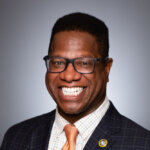
Tony Sipp is an accomplished legal professional with 19 years of industry experience, recently honored as the...

Jill I. Francisco, ACP, received her BA in Criminal Justice, (concentration in Legal Studies), from Marshall University...
| Published: | September 25, 2025 |
| Podcast: | Paralegal Voice |
| Category: | Access to Justice , News & Current Events , Paralegal |
We’re at an interesting and dynamic point in time for immigration law, with Supreme Court rulings and presidential executive orders reshaping the field and challenging the system’s status quo.
The administrative area of immigration law is especially difficult for legal professionals. In an immigration hearing, the judge is essentially on the same “team” as the prosecutor, and because immigration policies are largely under the federal executive branch, the rules seem to shift every four years with a new presidential term.
Guest Nikki Mehrpoo is a former judge, a scholar, and the first and only California dual certified legal specialist in immigration and Workers’ Compensation law. She is a lawyer as well as a professor of law at West Los Angeles College. She recently created the MedLegal Professor, a project dedicated to the ethical use of AI technologies in the field of law and medicine.
In this timely episode of Paralegal Voice, Mehrpoo unpacks recent Supreme Court rulings, executive orders, and even the use of AI facial recognition that are reshaping the field of immigration law. As a legal professional, what we think we know may be subject to change day by day, ruling by ruling.
Noem v. Perdomo, SCOTUSblog coverage
“ICE Awards Clearview AI $9.2M Facial Recognition Contract,” Biometric Update
“Nevada Judge Takes Creative and Unusual Approach to Combat AI-Generated Fictitious Citations,” LawNext
“The EU Artificial Intelligence Act”
Tony Sipp:
And welcome back to the Paralegal Voice. My name is Tony Sipp and we have a special guest with us today. Her name is Nikki Mehrpoo. She is a dual certified California attorney and workers’ compensation and immigration law blending 27 years of legal experience with leadership in legal tech, AI ethics, and national compliance education. As a former judge and refugee from Iran, she now serves as professors, strategists, and advocate designing frameworks like AI plus HI to modernize legal and medical systems while preserving integrity and care. Welcome Nikki, back to the Paralegal Voice.
Nikki Mehrpoo:
Thank you for having me. It’s always a pleasure to be with you, Tony.
Tony Sipp:
It’s great having you. So thank you for being here. This is a special moment in history and in time, which is the reason I decided that it would be great to have you on. We have so much going on in Los Angeles today that really is facing the nation and all eyes on us. Right. So before we dive into the legal specifics, could you share how your experience as an immigration specialist shaped your views on enforcement and constitutional protections?
Nikki Mehrpoo:
Immigration is one of those areas of law that most people don’t understand as an administrative area of law, and by that, when you walk into a Courtroom for immigration, the judge is on the same team as the prosecutor basically. So imagine being on a football field where the referees are wearing the jersey of this one of the teams. It’s not a fair game and unfortunately because it’s administrative law and not its own sovereign system, the system is very different and it feels like it changes every four years because the administration, whoever’s in charge, can define and change the rules as they please because it’s under the executive branch of the government.
Tony Sipp:
I didn’t realize that. That’s very interesting. Recently, the ninth Circuit recently affirmed that immigration stops based on race, language, or location violates the fourth Amendment. From your experience, how often do you see these issues surface
Nikki Mehrpoo:
When it comes to rulings like this, when it’s about race bias, about looking at someone’s skin or the way they speak, whether it’s an immigration or any other area of law? The United States has been very clear about it that we shouldn’t be doing that. Our Constitution specifically says we have rights, but unfortunately right now way those rights are being translated and utilized are different than what we’ve been used to in the past. I started practicing immigration law in 1997 and every year we’ve seen it change, but I have never seen it where how we perform in court, how we are in court is completely different. Everything’s taken away and we have to just really fight for justice in a different way than we used to. We were advocates for immigrants as immigration attorneys, I’ve always been, but we’re not just fighting the legal standards, fighting the system itself also.
Tony Sipp:
Wow, that’s powerful. I was reading the article because every year lapa, Los Angeles Paralegal Association does a run for justice that’s sponsored by the public counsel and they recently won a lawsuit. One of the cases that they had was called Vasquez PRD versus Nome, which is where the Supreme Court granted a stay on the TRO temporary restraining order that has blocked certain raid. What does a signal to you about how their emergency relief is being evaluated in immigration cases today?
Nikki Mehrpoo:
It’s funny, I was having this discussion with a few friends and I said, our legal protections can disappear while we sleep. And in a blink of an eye, it can be ruled one way and then automatically changed to the other. The fact of the matter is we have to realize that we have a legal system that goes through different levels of review and the ninth circuit can rule one way and then the Supreme Court can change it overnight. And that’s our reality. It’s always been that way. Our Supreme Court is a lot more active now than it has been in the past and ruling on things in the middle of the issue instead of waiting for it to get to them regardless. The fact of the matter is the Supreme Court is our supreme law of the land and they have ruled and we have to as advocates, as immigrants, and as anyone who’s in the system has to respect that and try to find a way to still be advocates and still make sure that justice isn’t just a theater, that we’re not just talking about it, but we’re actually pursuing it.
Tony Sipp:
Wow, that’s powerful. It’s kind of redefining the boundaries of law, immigration enforcement when they do something, when these decisions are being made. It’s fascinating. Our legal system, so one of the articles mentioned that one of the conditions of it’s the lack of access to counsel, which we’re seeing a lot of times. So what safeguards do you believe are most critical in preserving due process in high stakes immigration enforcement?
Nikki Mehrpoo:
I’ve sat in court or at a immigration interview with many, many, many clients that fear, that concern, that anxiety of one person having your life in their hands, their decision will affect everything about it. I don’t wish that upon anyone. Most of us, even in criminal court, we have the right to counsel, we have the right to a fair trial, we have a right to a jury, but when it comes to immigrants, complete livelihoods, whether they have a say in the system, think about it just to have a say in the system and it’s a convoluted, complicated, multi-level regulatory system, how can you not allow people to have advocates in court with them, especially when the government is represented, especially when the judge is on the government side also. So the system itself, you have to look at it like a macro and a micro version. The system itself is a little skewed, and for that skew, we need to rectify it by allowing legal professionals to represent people in court. And unfortunately right now it’s people who could have not even a high school education versus government lawyers that are instructed how to pursue the case in a very diligent and not necessary just way.
Tony Sipp:
That’s crazy. We see all these things on TV and the due process and they’re just getting snatched out of courts with immigration judges and enforcement agencies like ICE and DHS. Is there enough judicial independence to ensure fair outcomes?
Nikki Mehrpoo:
Well, those people that are on the bench are trying their best to navigate the legal system based on the directives and the fear. Imagine that judges fear losing their job if they don’t abide by what they’re being told instead of abiding by the law. It comes full circle for me, and I mean, what happened yesterday, and it’s a newsworthy thing, and it ties back into this. We’re in a society where whether you believe in someone’s voice or not, you shouldn’t kill them. What happened yesterday in the news? We are in such a place in our world where if we disagree with each other, violence is the only avenue for some people. And with immigration, with these high feeling meaning that we have a lot of feeling about these topics, we have to be careful. We have to be careful that violence is never the answer.
First of all, I want to make sure that we keep saying that because even if people are protesting these issues or even if they’re on the streets, we need to know that we’re the United States of America. We are the ones that people look up to. And as such, we should continue to try to show that we are protecting the people we are governed to serve. So unfortunately right now, the system is in drift. It’s drifting back and forth, and we don’t want power without rules. And that’s basically the gist of the whole thing. We want to make sure that there’s power. Our government has power, but it has to be set rules that are not wishy-washy and constantly changing. The only way we can do that is for the advocates to continue speaking up without violence. The advocates to continue fighting for justice and for the advocates to make sure that the referee really doesn’t wear a jersey for either team.
Tony Sipp:
It loves me the analogy, it’s fantastic. You can see it. It’s sad what happened to Charlie Kirk.
Nikki Mehrpoo:
That shouldn’t be something in our America.
Tony Sipp:
It shouldn’t be, and our America seems to be changing. It’s not the America that I grew up with. So if you could change one aspect of immigration courts and how they operate, what would it be?
Nikki Mehrpoo:
Due process, it’s gone out the door. And due process is something that it’s the foundation of our justice system and fairness and fairness doesn’t mean giving people everything they want. Fairness means that you walk into a room for a fight and you’re not already a loser.
Tony Sipp:
Well said.
Nikki Mehrpoo:
Yeah.
So everybody should be allowed to be part of the due process and have a say voice and be allowed to have an advocate that represents them justly and protects their rights so that the system is not rigged. We don’t want a rigged system. We don’t want to not believe in our system. To me, this too shall pass. But we need to remember as people who have fought the fight, that we just continue speaking our truth and continue speaking what the law has meant to us and what has been on the books for a long time. And we continue fighting. We can’t help everyone. And I have to say, as an advocate, I loved being an immigration attorney and also being a workers’ compensation attorney. I always fought for the little guy, and right now, the little guy needs a lot of help. And for those people who are fighting the good fight, I applaud you because it’s a hard uphill battle right now.
But we got to do what we got to do. I will say the one piece of advice I will give to people is just even though advocates and attorneys, even though it’s hard, even representing immigrants right now, feels like the rules are thrown out. Document everything, fight for everything you can have on the record, bring issues on the record. Don’t think that it’s not enough to fight on and argue and advocate because we need to be able to litigate these cases through the appeal system. We need to set a record for the future. These cases are not just about this moment and one person. These cases are about the entire due process and immigration system. So the advocates that are involved need to not just say there’s no use. They actually need to say it’s hard, but we need to get it on the record for the future of immigration.
Tony Sipp:
And this is why I have you on. So it’s fantastic,
Nikki Mehrpoo:
Tony. I say that, but I have to tell you, as part of my own self-governance, two years ago, I stepped away from the law, or a year ago now stepped away from the law. And why? Because I needed to self govern literally. And as a result, I’m glad I’m not on the front lines right now, although I’m consulting and although I’m advocating and although I’m preaching about what needs to be done, I personally could not after all these years be part of a system where all the rules are thrown out.
Tony Sipp:
It didn’t go into law to do this. This is a moment in time that a lot of people need to reevaluate what their commitment to law is and recommit to law. So let’s take a quick commercial break and we’ll be right back. We’re going to talk about AI and Clearview. Clearview AI is one of the, if you’ve seen on some of the social media where they’re taking their phones and it looks like they’re taking pictures of them, they’re using ai and it’s called Clearview ai. So we’ll talk about that on the other side of this break. We’ll be right back and welcome back to the Paralegal Voice. My name is Tony Sipp. I’m here with Nikki Mehrpoo. Before we took the break, we were talking about Clearview ai. Clearview AI is the technology that’s being used to when they take a picture of anyone when they’re doing their raids or mass raids on people. I looked up Clearview ai. That’s the technology that is behind the photography that they’re taking or videos that they’re taking. And it says that Clearview AI is advancing public safety by helping law enforcement to rapidly generate leads to identify suspects, witnesses and victims, allowing them to close cases faster and keep communities safe. They say AI is highly accurate. Facial recognition platform is protecting our families and making communities more secure and strengthening our national security and what say you
Nikki Mehrpoo:
Any topic can be spun for it to be a safety issue and it can be spun to be a not safety issue, and it could be made it feel like they’re doing right or they’re doing wrong. What you just read is basically them showing that Clearview AI is part of law enforcement and they’re helping the world be safer. Let’s backtrack for a second. Clearview has over 60 billion images in their AI system. Billion, not million. They’ve basically taken images off of the internet and incorporated it into their database or in their knowledge base. We need to also look at Clearview where they are having lawsuit after lawsuit after lawsuit in every state. So it’s important to note, yes, Clearview has a contract with the United States Department of Homeland Security. Wonderful. We have nothing against using AI to advance our world and be better, but again, it goes back to that concept of due process and what rights we individuals have, and if Clearview is being used, another issue that needs to be challenged. Because if regulators are ordering deletion of data, if it’s illegal for under privacy laws, what some of what Clearview is doing. One thing I want to make sure that everyone’s aware, the EU AI Act is probably the most strangest requirements that we have right now. And as such, we have to be careful that our privacy issues, our bias issues, there’s so much that can be done with AI that can be negative and rules are going to be more important every single day. When it comes to AI and how it’s brought into our world,
Tony Sipp:
It seems like our rights are just being taken away when they’re doing that. We have the fourth Amendment to be secure in our papers. It feels like that’s not happening a lot.
Nikki Mehrpoo:
It feels like our rights are being taken away. But look at our history. It’s always been that it feels rights are being taken away, and then there are those who are always speaking up and advocating and trying to make it better for the future. So again, people are suffering. People are suffering in so many different ways. The worst of it is for me is people being sent to third countries. They’re not being even sent to their own home country. They’re being sent somewhere else where they don’t even speak the language and things like that. But this is the law. We fight it. We process the law the way we know and fight it. And unfortunately, or unfortunately right now, the legal system is as important as ever. We need to document it. We need to show that what we’re fighting for and we need to show what is right and wrong.
Tony Sipp:
It’s true. It does seem like the highest court of the land is against us when they’re ruling in favor of things that we’ve known or grown up that are just unconstitutional. And yet they’re saying, yeah, it’s okay.
Nikki Mehrpoo:
I’m going to bring out the fact pattern that I talk about a lot in my classes in order to say this too shall pass. Meaning that we’ve always had it where we’ve gone through decades of the Supreme Court ruling it a certain way because of the people who are serving on the Supreme Court, the justices and the one that I constantly bring up in my classes, FSI versus Ferguson and Board of Education. So we have cases where separate but equal was okay, and then separate but equal was not okay. And that was just what years in passing were for the Supreme Court to catch up with the public policy requirements and the fairness, again, I’m not trying to downplay what’s happening right now. We just have to continue the good fight. And I know it sounds like just a slogan, but it’s not. We’ve had it in our legal history where courts have ruled a certain way and then decades later they’ve caught up. It’s same thing with how things have changed with roe. We never thought ROE was going to completely reverse itself by the Supreme Court. We go through these ups and downs, whether it’s good or bad for either side, it is still our legal system. It is ours, America, all of us, and we need to do the best we can to promote due process regardless of who’s right or who’s wrong and who’s doing what. Let’s just continue advocating where our founding fathers wanted for us due process.
Tony Sipp:
Well said. All right, let’s take a quick commercial break and let’s talk about AI and some of that technology and what you’re doing now in your new business. So let’s take a quick break and we’ll be right back and welcome back to the Paralegal Voice. My name is Tony Sipp. I’m here with Nikki Mehrpoo. Nikki, since we’ve been talking about immigration and the law and AI and how it can be a tool to help us. In your view, what does true collaboration between AI and human intelligence look like and how do we ensure that it remains equitable?
Nikki Mehrpoo:
The human must stay in charge every step of the way. AI is a tool. AI is not a human being. It doesn’t think, even though you may think it thinks, it is just a tool just like every other tool, when those of us who are old enough to remember a fax machine coming into our world, we were in awe of the fact that someone can fax something from across the world and we can get that document in our fax machine. Remember those days?
Tony Sipp:
I remember those dates.
Nikki Mehrpoo:
And just because it puts us in awe, doesn’t mean it shouldn’t be regulated. It doesn’t mean that we don’t hold people accountable for what they’re doing with the ai.
Tony Sipp:
One of the biggest things that, and I’ve read an article just recently, and it’s from Law Next, and it’s a Nevada judge who takes, it says the title is Nevada Judge Takes Creative and Unusual Approach to Combat AI generated fictitious citations. So one of the things that as we all know has been happening lately is the hallucination of cases sites, and a lot of attorneys are getting caught utilizing chat GPT for some of their papers or some of their pleadings that they’re submitting. And this judge took a rather unusual approach when he caught that fraud. Instead of sanctioning the particular attorneys on this case, he asked the two lawyers to write a paper to the state bar explaining what they did and why they did it. Basically apologizing and to write a letter to their law school to apologize for what they did and hopefully eventually see if that the president of the law school would allow them to do a class on what they did utilizing chat GPT and the fraud. And that the fact that they submitted it and see if they could teach a class. And the judge said that he would also attend the class if the president would allow that to happen. So in your opinion, why do people use that and why did they use it ineffectively? And what should be done to help lawyers who pass theBar and have an ethical commitment to that? What should they do better so that they can utilize AI as a tool and not the way that’s being used so that it’s fictitious citations that are coming up?
Nikki Mehrpoo:
First and foremost, this is not just a lawyer thing or a legal thing. If you Google the news and just find out about people being caught using AI school of students in ways, so it’s not just a lawyer thing, but the fact of the matter is that our duties as professionals, whether we’re lawyers, doctors, nurses,
Tony Sipp:
Paralegals,
Nikki Mehrpoo:
Architects, whatever, paralegals,
Paralegals, when I say lawyers, I always in my classes say, you’re under the umbrella of the attorney. Meaning that whatever rules and requirements the attorney is bound by, you should always do so also. But when it comes to ai, the shiny new tool is in the room and no one’s been given rules before it was brought into the room. And as such people are forgetting about their duties and using this new shiny tool in a way that is not based on our professional responsibility. And we have to step back and do a macro look at the process. We would never just use information that we thought someone just gave to us. We as attorneys, we as paralegals, we as professionals have to verify, confirm and make sure it’s real before it’s used in any capacity. And right now, unfortunately, there’s no oversight. AI has been brought into our workflow.
AI has been brought into our systems. Even hidden ai, this is the biggest thing that I come across. I talk to people saying, you have AI in your workflow. And they go, oh no, we don’t have AI in our workflow. And then I map it out and show them that the tools they’re using have AI in them, then look at me like, what are you talking about? And hidden AI is a reality and people need to, especially professionals who have duties and have to protect those they serve. You can’t just use the shiny tool because it’s fast and it can help you do things quicker. We still have to have oversight. We still have to be bound by our duties. And this is how this whole new pivot in my career started. I started going to conferences two years ago and listening to all these speakers talk about the great things about AI and how they’re incorporating it in every aspect of our workflows, whether in legal medicine and anything. And all I did was take notes saying, what about malpractice? What about protecting those we serve? What about consent? What about disclosure? So I started thinking about it in a completely different way than most people were looking at it. And that’s how this whole concept of trying to bring it to the forefront that professionals need to wake up, that just because there is a Ferrari in the garage doesn’t mean you should just go and start driving it without knowing what power it has.
Tony Sipp:
Well said. So tell me more about that. What are you doing now? I mean you have all this legal experience. It sounds like you’re taking all of that experience and that knowledge and that information and you’ve pivoted to use it to help others in a different way. What are you doing now?
Nikki Mehrpoo:
So anyone who knows me knows I’m a geeky nerd.
Tony Sipp:
Yes.
Nikki Mehrpoo:
For me, education and learning and being a sponge for more information is part of my DNA. I literally looked at what was going on and the vendors and the innovators and the people who are more knowledgeable about AI were saying to professionals who don’t know about ai. And I started, if you can believe it, I started architecting AI governance. That’s a big word. And I started working towards saying, yes, the EU AI Act or the laws in the United States set standards for using AI responsibly. But as professionals, that’s not our standard. We’re not just supposed to use it responsibly as professionals. We’re duty bound. We have to make sure that we show that we’re protecting those. We serve that the decision is our decision and that we are signing off on that decision. It’s our signature on the bottom line. And that we’ve put in safeguards and guardrails in place throughout the system to make sure that AI is being used in a way that doesn’t take away our responsibility as professionals.
And by that, what I mean is AI is a great thing, and I want to make sure people understand I’m an AI champion, but I’m a bigger AI plus AI champion. And by that I mean we as human beings must be in charge of what we are putting our names to, what we’re sending to our clients, our patients, how we’re getting our clients and patients involved in this process. And so I architected a whole mechanism where I took all this most stringent AI standards from the EU all over the world, then incorporated all our professional responsibilities into an architected our professional responsibilities. And also then taking into account HIPAA rules, the attorney client privilege rules, things that you have to all consider. And I created what is now called the Triple E AI protocol for professionals, and EE stands for educate, empower, elevate. And those three words are not a slogan.
They’re about the concept of, I’m not saying educate yourself about ai. I’m saying educate yourself about the risks of ai. As a professional, we wouldn’t walk into a Courtroom or a surgery without knowing what tool we’re using and what the risks are and how it can affect our patient or our client. It’s the same thing with AI right now. It’s a great tool to have, but it’s just a tool. And for me, the best way I can explain it to people, we as professionals have to document our professional opinion in our clients and patients’ files as to how we came up with the strategy and the way we’re going forward. If it’s an augmented decision, it needs to be indicated that it’s an augmented decision. And how you verified that information if three years from now someone sues you as a professional. And this is not just about protecting the professional.
This is first of all, the strongest part of this is about protecting those we serve, including ourselves. Think about that, protecting those we serve, including ourselves. So that means we should be good to the people we are duty bound, but also making sure that we can sleep at night. It’s that concept of self-governance in addition to AI governance. And as such, we need to make the rules and the system available so that people understand how to integrate AI into their professional workflows without it just being a tool innovation that has been created by people who don’t understand our legal and professional obligations.
Tony Sipp:
That’s fascinating. What is the company called?
Nikki Mehrpoo:
The company’s called the Med-Legal Professor. And you know how this all came about? I had judges and lawyers and peers and colleagues all calling me throughout the last couple of years asking, this is happening in court. What do we do with this situation? This is, again, I’m a self-proclaimed geeky nerd and I love it. But now I’m a geeky nerd, augmented, and by that I mean that I govern AI with the help of ai because you need to be able to understand it’s a powerful tool if you use it responsibly, if you use it, and that you’re accountable to how you’re using it. Professionals can’t just use any tool. I’m not talking about just ai. I walk into rooms and I say this first, just because AI is in the room, it doesn’t mean our professional responsibility and duties went out the door. We still have to abide by what are the A-B-A-M-A-D-A, our state regulators.
Those rules still exist. You just now have to figure out how to use it safely, responsibly within the dynamics that were already within. And that’s what scared me. People were just saying, ai, ai, ai. And I’m going, wait a minute. Someone has to prove if they use this ai, if the AI recommended a legal strategy, a diagnosis, and you get a malpractice case three years down the road, how are you going to prove that? Okay, AI recommended this, but you didn’t just rely on the ai, you did your own analysis because it’s called, remember, unlawful practice of law means that someone who’s not allowed to practice law is practicing only lawyers and people who are professionals or doctors are allowed to give medical diagnosis and give legal advice. Let’s remember that AI can help us as a tool, but the the final decision of how we move forward on a case, how we deal with a diagnosis has to be up to the professional.
Tony Sipp:
I agree. I agree. I hate to say it, but I was just reading Project 2025, and one of the options is using AI as a tool for your medical. That’s one of the things that telehealth, which is great, it’s fantastic, but they want to use AI to make medical decisions. And I think that’s your point is valid on that, where they’re not letting the doctors make the decisions and they’re letting a tool make the decision, which is scary.
Nikki Mehrpoo:
I’m going to say one of the key things, why am I doing this? Because AI is powerful and power without rules, sprints into abuse. It’s great that we have ai, and just so you know, I’m an AI created ai, augmented, AI operated business, and I’m proud of it. So I’m not saying AI is a bad thing, and I’m going to keep saying this because people think because I’m trying to put guardrails in place that I’m against innovation. Not at all. I love it. I just say we need to do it responsibly and be duty bound in using it.
Tony Sipp:
Well said. Listen, this has been fun. And what I want to do, I have 15 yes or no questions, Nikki, for you. Yeah, yeah, yeah. They’re going to be fun. So when you’re ready, we will go off. Just say the word,
Nikki Mehrpoo:
I’m ready for you. Anytime.
Tony Sipp:
Let’s do it. Alright. Do you believe AI systems should always require human oversight?
Nikki Mehrpoo:
Always. AI is just like a MRI machine, just like the Westlaw in our legal world. It’s a tool that is helping us do our job. It is not in charge.
Tony Sipp:
Should you be able to explain a non-negotiable feature?
Nikki Mehrpoo:
Yes. Explainability?
Tony Sipp:
Yes. Explainability. D. A non-negotiable feature of ai.
Nikki Mehrpoo:
So one of the things, I know I’m such a geeky nerd. One of the tests that my protocol has put into place is called the EAT test, EAT, explainability, auditability and Traceability. If we as professionals cannot explain and be able to audit and be able to trace what the AI is doing, you should not be using it.
Tony Sipp:
There it is,
Nikki Mehrpoo:
Right?
Tony Sipp:
Yes. Do you think most organizations underestimate the risk of biased ai?
Nikki Mehrpoo:
Yes. I think they don’t even know what it means. And one of the things I’ve been doing in a lot of my educational sessions or in my consultations is actually showing them. And the best one I have is, I don’t know if you’ve seen, my new company has a woman. She’s a caricature that we’ve been using.
Tony Sipp:
Oh, I love that. I love her. She’s so cute.
Nikki Mehrpoo:
Yeah, the medical professor. And we’ve been using her. So every day I change things about her in the AI system. Every day we put her in new clothes, we do things for every holiday. We do that too. And here’s the bias, Tony, this is the best way I can show you bias. Every day that image comes out exactly the same. When I was doing Juneteenth, all of a sudden it gave it back to me as an African-American med-legal professor.
Tony Sipp:
True identity.
Nikki Mehrpoo:
So that’s bias. That’s what happens where it assumes based on the information it has, it gives you outcomes that are biased based on its knowledge base. We have to be careful what we feed into. The AI is going to have consequences as to what we get back from the ai.
Tony Sipp:
Well, you’re my sister regardless. So I’ll take it. I’ll take it anytime.
Nikki Mehrpoo:
It’s the best way of showing that we’ve done a hundred images and it’s come out one way and by just using a holiday that is for African-Americans, then they change the picture to an African-American. So that’s a bias. We have to be aware that the AI has these biases.
Tony Sipp:
It’s implicit bias. It’s there. So true.
Nikki Mehrpoo:
And it could be utilized in hiring. It can be utilized in resume reviews. It can be utilized across the board. It’s not just me saying I’m creating an image. It’s the fact that that premise can be used against people in every facet of life.
Tony Sipp:
If you have an ethnic sounding name and that comes up, AI is scanning those resumes. It’s not a human, for the most part, the bias, the implicit bias there. Being mindful of that. So good point. Would you support global standards for AI governance? Like e protocol, E, e, e protocol?
Nikki Mehrpoo:
Yeah. So I have to say that America needs to really wake up and smell the EU AI Act and really step up to the table and see that the entire European nations, all the European nations have started doing a lot. And it’s the most stringent, but it’s just a baseline. I want to make sure everyone understands that just because it’s set standards doesn’t mean there are not more standards to set on top of what countries and nations around the world are doing. So as I said, we have to start with the baseline and then add our own duties and our own responsibilities and our own malpractice and issues that we have to have in order to use the ai. So it’s that concept that educate about the risks, empower yourself about how to use the tools and elevate the leadership. The leaders need to step up and elevate the use of AI in a way that is responsible, ethical, and accountable.
Tony Sipp:
Have you ever had to challenge a tech decision on ethical grounds?
Nikki Mehrpoo:
Actually, yeah. Right now, part of my pivot has been, I’ve been doing a lot of innovation consulting with modernization at the state level in different states and also at the founders level, meaning founders are asking me, there are times that I have to say, wait a minute, no one’s going to be able to use this if you go in this direction because the outcome will be A, B, and C. Those of us who get it, those of us who understand that there’s real life consequences, our decisions, the utilization of ai, people’s lives are in our hands. And I keep saying that to innovators. It’s great that you can do these things much faster. It’s great that you can do these additional steps, but the fact of the matter is you need to keep the people in mind. Keep the person, the human in mind in innovating, in deploying. You have to know that it’s a powerful tool. I don’t think most people understand how powerful it’s is.
Tony Sipp:
So two last questions. Do you believe public dialogue is key to building trust in AI systems?
Nikki Mehrpoo:
Without public dialogue? With without true leaders, without thought leaders, without people who speak up, people have to take responsibility for this type of movement. And I call it a movement. I say that my job right now in the world, I left the practice of law to do more. And this is my more and my more is bringing it to the world that you need to govern before you automate. You need to govern before you automate. And those are not words. If we are bringing this powerful, powerful tool into our world, you don’t just bring it in and then say, let’s figure it out. You actually have to put the rules in place before it’s brought into your world.
Tony Sipp:
And last question, do you believe diverse teams build more ethical technology
Nikki Mehrpoo:
In any kind of building? It’s not just technology. We need diversity at every level. We need people at the table that bring, not just you don’t want people in the room who are just going to agree with you. You don’t want people in the room that have the same exact views as you. If you’re really truly building innovation, if you’re really truly trying to do something better for the world, you have to have people at the table from all different facets of life and with different voices and actually listen to them. That’s part of my own self-governance. For me to listen to other people has become such a priority in my decision-making process where I can’t go in assuming I’m right. And that assumption is what makes the mistake is a mistake for all of us that we believe we’re right and we’re defending whatever our choice is, listen up, allow others information to come in and then see if you’re right or wrong.
Tony Sipp:
You are the most amazing guests. I wish we could have more time to talk to you about this in these topics, but thank you for sharing your insights on immigration, on ai, on your pivot point.
Nikki Mehrpoo:
I do want to say part of my movement as part of our getting professionals more involved in this process, the website is govern before you automate ai. So that’s easy enough to remember, govern before you automate ai. More than anything, we’ve created a free governance community, meaning people come in and give us their issues and their concerns, and we’re trying to get people more involved in professional governance.
Tony Sipp:
I love it. That’s a great pivot. And with your years of experience, I only see success for you, so it’s going to be great. So folks, if you want to get in contact with Nikki, Nikki, I presume that’s where they can get in contact with you. Is
Nikki Mehrpoo:
There? Yeah. Govern before you automate.ai, they can find all the information they need. Or LinkedIn, N-I-K-K-I, Nikki Mehrpoo, M-E-H-R-P-O-O. And my hashtag is I govern ai.
Tony Sipp:
Perfect. Awesome. Well, thank you for being our guest today on the Paralegal Voice. Folks, we will see you next time. Have a wonderful day.


Notify me when there’s a new episode!
|
|
Paralegal Voice |
The Paralegal Voice provides career-success tips for paralegals of any experience level.