
|
|

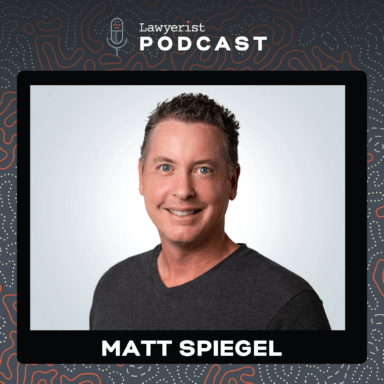
Matt Spiegel is the co-founder and CEO of Lawmatics, an attorney-client relationship management platform. A serial entrepreneur...

Zack Glaser is the Lawyerist Legal Tech Advisor. He’s an attorney, technologist, and blogger.
| Published: | February 10, 2026 |
| Podcast: | Lawyerist Podcast |
| Category: | Legal Technology , Practice Management , Solo & Small Practices |
Lawyers are understandably cautious about AI—but the real risk may be using it the wrong way. In episode 601 of the Lawyerist Podcast, Zack Glaser sits down with Matt Spiegel of Lawmatics to explore how agentic AI is changing the way law firms handle intake and evaluate potential clients.
Matt breaks down why surface-level AI tools fall short, how agentic AI can make informed recommendations instead of opaque scores, and what it takes to build trust in automated decision-making. They also discuss how better intake systems can reduce wasted time, improve lead quality, and support more intentional firm growth.
Listen to our other episodes on Artificial Intelligence in Legal Practice.
Links from the episode:
https://www.lawmatics.com/
Have thoughts about today’s episode? Join the conversation on LinkedIn, Facebook, Instagram, and X!
If today’s podcast resonates with you and you haven’t read The Small Firm Roadmap Revisited yet, get the first chapter right now for free! Looking for help beyond the book? See if our coaching community is right for you.
Access more resources from Lawyerist at lawyerist.com.
Chapters / Timestamps:
00:00 – Introduction
01:28 – Meet Matt Spiegel
03:55 – From the Cloud to AI in Legal Tech
05:38 – Why Lawyers Are Cautious About AI
06:50 – Moving Beyond Surface-Level AI
08:51 – Why Lead Scoring Misses the Point
11:14 – What Makes Agentic AI Different
14:10 – Generative AI vs. Agentic AI
15:57 – Teaching Software to Make Decisions
17:17 – Automating Outcomes, Not Steps
20:10 – Why Lawmatics Was Already Agentic
21:47 – Trust, Guardrails, and Client Data
24:20 – What Qualify AI Does Differently
25:33 – Closing Thoughts
Special thanks to our sponsor Lawyerist.
Zack Glaser:
Hey y’all, it’s Zack, and this is episode 601 of The Lawyerist Podcast, part of the Legal Talk Network. Today we have a sponsored episode with Matt Spiegel from Lawmatics, where we’re talking about artificial intelligence in SaaS platforms, specifically agentic artificial intelligence in your intake. So I’d suggest that you stick around and listen to my conversation with him next.
Matt Spiegel:
Hello, I’m Matt Spiegel. I’m the founder and CEO of Lawmatics.
Zack Glaser:
Matt, thanks for being with me. You’re the founder CEO of Lawmatics. You’ve been in the SaaS and legal tech space for a while though, even before Lawmatics, I’d say.
Matt Spiegel:
Yeah, feels like a lifetime.
Zack Glaser:
So you’ve moved through, you’ve seen some iterations of what’s going on with legal tech. You’ve seen-
Matt Spiegel:
I’ve seen some stuff, Zack.
Zack Glaser:
I’ve seen some stuff. Yes. I can see on your face. You got a rattled face there, the 30,000 foot stare. But you were in my case and all that when we were moving to the cloud, right?
Matt Spiegel:
Yeah. Yeah. Yeah. I feel like I’ve been there for the beginning of several pretty big paradigm shifts.
Zack Glaser:
Yeah. I think that’s a good way of saying it. And I’ve got to point to this, but obviously the beginning of legal tech is the printing press really. So I don’t want to say since the beginning of legal tech, but for a while. And we’re in another profound shift and you’re on the precipice, you’re in the mix. Lawmatics very specifically is not only kind of in the waters, but helping to … I mean, leading and doing some things that are big movement. I want to let you talk about it. But obviously I’m talking about artificial intelligence and incorporating artificial intelligence into legal tech and these SaaS products. Talk to me a little bit about that. I think you’ve got a perspective on how do I incorporate artificial intelligence into my product? Because Lawmatics for the uninitiated is, it’s a CRM for all intents. It’s more than that, but it is a way of keeping track of client information and communication with our clients, our relationships, document creation, a lot of things like that.
But now artificial intelligence has kind of entered the fray and you’ve got to say, how do I bring this in? How do I bring this into my product? And you guys have been very thoughtful about that.
Matt Spiegel:
We have. And I think, so you make the point about the cloud. So when I started in my case, the cloud was just becoming a thing. And what we saw in legal was the same thing that we see. Well, yeah, we saw in legal with the cloud, what we see the legal with everything, which is slow adoption. Yeah, that goes. And usually approach with some trepidation. And that’s what we saw with the cloud. It took, believe it or not, a long time. I think it’s only in the last five or six years that people really became comfortable with the idea of using the cloud in legal, even though they’ve been using it for so long. And so that was such a big shift. You’re completely changing the way you do everything when you went from on- prem to the cloud.
And it opened a lot of doors. What AI has done in the last few years in a much shorter period of time is it’s even more seismic shift. It opens even more doors, but you’re seeing the same thing. You’re seeing lawyers be very concerned, very cautious about using it and approaching it. And maybe a little less so than they were with the cloud because I think the power of AI is just so hard to ignore. So you can’t really get too scared of it too quickly. But there are obvious concerns in legal things that you probably want to steer clear of using it for. But in general, it’s been the most profound impact.
AI has had the most profound impact in legal than anything else I’ve seen. And I’ve been in this space for 17 years and the cloud is the only thing that really comes close to the impact that AI has had. So we’ve taken that approach of like, “Hey, we understand that lawyers are a little nervous about AI.” And so I think that was baked into our approach to AI as a company. Our thought was we need to do some … We’re not going to mess around with the superficial stuff. We’re not just going to start throwing AI into our product just for the sake of saying that we have AI because our thought is the less we think through it, the more worry our customer is going to have. The more concern our customer’s going to have about what does that product do? Is it scary to me?
Is it going to use my data? Is it going to take my data? What’s it going to do? And so we put a lot of thought into, you have this surface layer of AI, which is effectively a ChatGPT wrapper. It can answer some questions, it can do some things. You can say, “Tell me what happened with this, and it will answer.” Or, “Hey, write me an email, draft me content.” That’s sort of
Zack Glaser:
Surface level, right? Summarize, create that. Yeah.
Matt Spiegel:
These are surface level things. Where we saw the value is in the layers deeper than that. The more depth you take with exploring what you can do with AI and the deeper you go into your product and how AI can be used, I think that’s where the real value unlock is. And sometimes that could be even more scary to the user, but we thought about it in terms of, we didn’t look at what problems can AI solve. We looked at what are the biggest problems that our customers have and can that problem be solved with
Zack Glaser:
AI?That’s interesting. I hadn’t heard a SaaS company phrase it that way because that’s how I tell attorneys to adopt AI is, what are your problems and can AI solve it? Not, how can I throw AI at this? And I think that is telling because like you said, with some sort of chatbot built into your product, it’s ChatGPT or something like that with a little wrapper on it. Okay, it’s going to summarize some things.That’s helpful. But I really liked your concept of, if I just throw that in there and it feels willy-nilly, then my clients, my users may not trust that as well. But if it looks like I put a lot of thought into it and I did put a lot of thought into it, then they’re going to see that and feel that ROI and have more of an inclination to adopt it.
Matt Spiegel:
I think that’s right. And so that’s how we approach. And it’s fun to hear that you think about it the same way and that our approach has been very deliberate that way. It’s also meant that we all were a little later to launch a true AI product. And in fact, we just launched our first real AI product on Monday, ironically, and it is an incredibly valuable product that is very, very well thought out and it’s very much an agentic experience. In fact, our customers get to build their own custom agents to do lead qualification, but we pull the covers back on what’s happening. I think that’s important for the trust too, is like this agent is going to be making a lot of decisions and a lot of recommendations for you, but we need to tell you the why and the how and the confidence level.
What I get afraid of when we’re talking about a lead qualification platform, which is what our new qualify AI product is, a lot of other companies out there that do lead scoring for various industries, it’s like you put data in and this box just spits out a score. You don’t really know what happened. And in our learnings when we were building this product, we learned that’s not going to give lawyers the warm and fuzzy. So first of all, we decided to not give a score. We give more of a recommendation or the agents will give you a plan like, “Hey, you should chase this lead hard or you should refer this out or something like that, not necessarily a score.” But then we give them a confidence level on that rating and we also give them all of the reasons why. We give them summaries as to the thinking behind why this determination was made. And then we allow them to give feedback to help train it like, “Hey, I expected to see this, but I got this. ” And that really gives our customers that confidence and that comfort using it. And I think that’s a big part of figuring this all out.
Zack Glaser:
Yeah, because if I get something just coming out of the black box and it says, this is a 4.6 out of five for lead quality, let’s say, I don’t know if that 4.6 aligns with my values necessarily. How do I qualify a lead? And there are going to be some things that are intangible that can be, like we’ve found that AI can kind of deal in the intangibles sometimes when we put enough data around it. And so if it’s telling me why, why is it, and not why is it giving it 4.6, but why should I chase this lead hard? That does seem like something that would be more valuable than just the number, the 4.6. But talk to me a little bit more about, so we’ve danced around this idea of AI that’s kind of slapped onto a SaaS platform and that being kind of like just putting a chatbot into there, just grabbing a chatbot and saying, “Okay, well, I can query against my cases and things like that.
” How is this Qualify AI product different than that? What is it doing that’s different than that, that’s more?
Matt Spiegel:
Well, I think if we take a step back, I think the answer to that question, it’s like maybe a little holistic approach to AI in general helps because I think it helps illustrate the difference there. We really looked at the world now as boiling down when you’re kind of a SaaS company, we’ve kind of boiled it down into three different buckets that you kind of fall into now. And you’ve got kind of general SaaS, which at this point is probably dead. If you’re just a pure SaaS company and there’s nothing AI about your platform, in the next couple years, you will probably go to zero in revenue. I think that’s just a bit of a reality.
Zack Glaser:
I’d say that is, I actually, last week I advised one of the labsters that I deal with to move away from a practice management platform. And I usually don’t do that. I usually tell people the management platform that has your crap in it is the best one. But the reason I did is specifically because it doesn’t look like it’s going to be innovating in the artificial intelligence space, and that’s just too much data to not innovate
Matt Spiegel:
On. It’s a problem. So I think, and not to mention also, the ability to spin up products is exceptional right now. And if you are just a SaaS product, like you are, let’s take a to- do app, like a Trello, right? I could go right now into Cloudcode and I could say, “Build me app that is just like Trello and it’s going to build it in about 30 minutes and it’s going to be a fully functioning app that I can deploy.” And so it’s purely SaaS. There’s no other AI bells and whistles, which means I could just build it. And so I think in the next couple years, SaaS goes away. Then the second bucket is you have SaaS with AI kind of layered in and that would be AI. Or that would just be with generative AI tools built in. So that would be like, “Hey, write this for me or summarize this for me or a Copilot that allows you to ask some information about your data.” That is pretty much table stakes now.
So SaaS companies, if you want to stick around, you’ve at least evolved to be SaaS plus generative AI. Then there’s the third bucket, really specific on the third bucket, and that is the Agentic AI experiences. There’s SaaS with agentic AI.
Zack Glaser:
Define Agentic. Yeah. Yeah.
Matt Spiegel:
Yeah. So to me, the difference between the two, the difference between generative AI and Agentic AI is generative AI is you’re telling it to do something and it’s just responding to what you tell it. So, “Hey, write this email for me. Okay, I will write this email for you. Tell me on what date I had this hearing. Okay, here I looked through and here is your answer.” It is a prompt and respond type of feature. Very, very, very powerful. Don’t get me
Zack Glaser:
Wrong. It can be used wonderfully. I use that type of thing all the time. Yeah.
Matt Spiegel:
Yes. We all use it every day. It’s very much woven into our daily lives right now. That’s generative AI. Agentic AI is you have this artificial intelligence, this agent that is tasked with doing something. It’s tasked with an outcome. And how it gets to that outcome, it can kind of decide. It Can make decisions on how to do something. So for example, for us, with Qualify AI, you’re creating an agent and the task is to qualify this lead. Well, it is going to make its own decisions on how it qualifies that. Now, we’re allowing you to put some guardrails in there and it’s learning from your own data, but agentic AI is where it is making a decision. It is getting towards an outcome. And along the way, it is going to make a certain decision, whether it’s how it gets something done, why it gets something done. It’s going to make a decision at some point in that process. And that is agentic AI. It is doing something for you. It’s taking action and making decisions in that process.
Zack Glaser:
So that starts to get into the promise of AI, of machine learning, of all this. I remember years ago, I read an article about how a machine learning bot, an artificial intelligence bot was able to beat a human, excuse me, at the game of go, which is a classically- Love that
Game. Yeah. It is a game of intuition. And if a bot can beat a human at a game of intuition, well, then it can start to make these choices. It can make though … I put thoughtful in quotes, but it can make thoughtful choices. And so I think that’s what we want our AI to do that is beyond what we can do right now. But when I think about that currently, I think of those as being somewhat limited. It is that agent or that piece of artificial intelligence can only play go. We’re not talking about general AI. So how is this something that can be used that is not just kind of like a one trick pony sort of thing that can be used broadly or that I can harness a lot in Lawmatics?
Matt Spiegel:
Yeah. So in our platform specifically, I think, and we’re just scratching the surface, this is our first product, our first Agentic product. I think as you see it evolve, you start having these agents. So imagine you’re telling an agent to, “Hey, your goal here is basically to, first of all, to find the high quality leads, and then I want those leads to get booked to come in for an appointment as soon as possible.” Well, that’s sort of the goal, right? Yeah. But Now this agent has all of the tools inside of Lawmatics available to it to go and execute to achieve that goal. And so it may decide, you know what, I’m going to send them a text message and I’m going to have them respond with when they’re available and I’m just going to book this appointment right there. Or maybe it decides, you know what, this person doesn’t, they’re not responding on text or they’re doing, so I’m going to send them an email with a form that they can fill out. It can choose to do whatever. And so now you’re not having to do any of it. You have an agent that is tasked with a specific outcome and it has the tools that it needs in order to get to that outcome.
Zack Glaser:
Thank you. That’s exactly what I was trying to get at there. And I don’t know that I asked the question very artfully, but that’s exactly what I was trying to get at because Lawmatics, I’ve known it as a product that has a lot of automations
And has been able to help people with automations. And I think when we get into agentic, the differentiating or even imagining beyond just step one, step two, step three, or decision tree sort of automations is tough for people. And I think that when we say, “Okay, well, we have a bot that is going to help us qualify.” If I’m just Jamy Attorney sitting there, I’m thinking, “Oh my God, how many nodes am I going to have to write to tell this thing how to do this? ” But agentic AI is, I don’t want to say fundamentally different than that, but fundamentally different than that because you’re not writing. The reason I use Go as an example is because Chess has essentially a known amount of moves that can be made. And so you can brute force chess. A computer program can figure out what all the potential moves that could happen are and extrapolate out.
But go, you can’t. You can’t just brute force it. You can’t just say, “If this, then this. ” And so that’s the difference here is that the attorney isn’t writing an if this, then this sort of intake code. They’re teaching an agent.
Matt Spiegel:
And then you bring up a really good point that we talk about a lot here because as we started to go deep into this concept of embracing Agentic AI, we had a realization moment whereas, wait a second, we’ve actually always been agentic. That’s what Lawmatics is. We’ve helped you build these workflows. Well, each workflow could be considered an agent. It has an outcome and it has steps to get there. And those things happen automatically. It’s just that you’re telling it exactly what step to do. The difference is Agentic AI can get to that outcome. It can choose how it gets there. It doesn’t need to be so rigid. It can make the decisions for you. It’s really interesting that it just fits really well with who we are. We’ve always been an Agentic platform. Now we are an Agentic AI platform.
Zack Glaser:
I think that’s a really good point. So the other issue that I want to just talk about here just for a minute or two is when we talk about Agentic, a lot of times the example that’s used is booking my airfare. I don’t want to give an agent my credit card number, and I’m not going to, but I will give an agent access to my potential client information, but I don’t know that I’m super crazy comfortable with that. How do you help people be comfortable with an agent taking action on their behalf as it relates to potential clients? Because I know you’ve thought of this.
Matt Spiegel:
We have thought of this. So first of all, when we’re qualifying the lead, we don’t actually need the person’s name. That doesn’t mean anything to us. We don’t need the person’s email address, right? That’s in our system. As far as our model making the decision, all it needs are the data points from that person. So that’s not really identifying information.
So that’s one way that we mitigate that. The other way is, again, if you’re using Llomatics, you’re already building automations to interact with your leads. So we’re not doing anything that you’re not already doing. The deal is that our agents are sort of confined to utilize the tools that are available in Lawmatics. Now that’s pretty broad because you can text message in Lawmatics. So an agent with our product, which will be called Engage AI, which will be coming to market the first version in the next probably two months, that will have access to text messaging. So in theory, it can start text messaging, but the guardrails that we put along there are pretty rigid and it’s got very, very specific goals and it will only do what it needs to do to achieve that goal. So if you’re … And again, the only information that it needs is information that’s already in Lawmatics anyway.
It’s not taking any personal information and putting it through a ChatGPT system or anything like that. It may take data points to put it through, but it doesn’t need the name for that. If it’s going to go and send a text message, just going to find your lead in Lamatics, it’s going to just use the Lawmatics infrastructure that already exists to send communication. So it’s not introducing any sort of new communication concept. It’s just doing the things you would already do, but doing it for you.
Zack Glaser:
I like that. I hadn’t fully baked that in my own brain, is you’re sending text messages to these clients by hand. You’re sending emails to these clients by hand. You’re sending emails that say blank to these clients by hand or manually, I guess. Now you have created an agent, the attorney, the user has created an agent that’ll make some of those choices for you.
Matt Spiegel:
Exactly right.
Zack Glaser:
Yeah. Before we go though, and I think we’ve actually covered a lot of stuff in this, but before we go, what else would you like people to know about Qualify AI specifically? Because we’ve gotten into it a little bit more specifically, but we’ve talked about AI in general and agents in general. Is there anything else you’d like people to know about Qualified
Matt Spiegel:
AI? Yeah. I think, look, I think this is the first of its kind in our space. This is a fully customized agents that you get to build that are designed for whatever you want, whether it’s specific to a very nuanced practice area or a broad practice area or however you like to segment your leads. This is a tool that makes it really, really, really easy to train the agent and build an agent that is just going to be amazing at telling you, these are the leads that you need to go and spend your time on. Don’t waste time on these. You would be shocked at how many firms … Well, it’s every firm and how much time is being wasted by these firms on leads that are bad leads because they don’t know. That’s now a thing of the past. You can save all of that time.
I mean, we’re talking hours and hours and hours a week that are being spent by firms, even with small lead volume. You don’t have to be getting 200 leads a month in order to benefit. It’s a totally new approach. It’s a totally new way to use Agentic Ai in legal. And I encourage everybody to check it out because I think it can have a very profound effect on your workflow.
Zack Glaser:
Well, this is definitely one of those places that in my brain I think of using Agentic AI in the legal field. So if people want to learn more about Qualify AI or Lawmatics in general, can they get a demo? Where can they go to look at this?
Matt Spiegel:
Yeah. Just going to lowmatics.com is the best place. If you are a customer, you’ve probably already gotten communication about Qualify AI and you’ve probably already seen it. If you’re not, you come to Lawmatics, we’re going to be happy to give you a demo of the platform and weave QualifyAI into it. I mean, that’s the beauty is Qualify AI just gets woven into our automation platform. So you’re using it to qualify these leads and then having the automation take action based on what the recommendation is from the agent.
Zack Glaser:
Love it. Well, Matt, thank you for talking to me about this. I think this is a very cool product.
Matt Spiegel:
Thank you as always, Zack.
Zack Glaser:
And thanks for talking to me about agentic AI versus LLMs versus generative AI in general anyway. So thank you.
Matt Spiegel:
Yeah, thank you, Zack.

Notify me when there’s a new episode!

|
Lawyerist Podcast |
The Lawyerist Podcast is a weekly show about lawyering and law practice hosted by Stephanie Everett and Zack Glaser.