
|
|

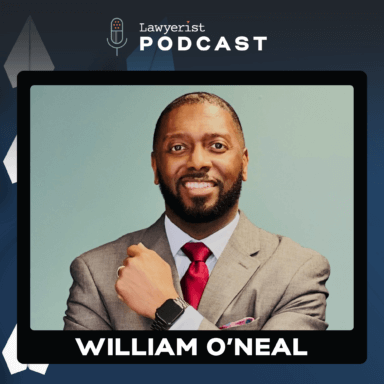
William O’Neal is author of 5 Essentials for Developing Greatness an enjoyable short story for all ages...

Stephanie Everett leads the Lawyerist community and Lawyerist Lab. She is the co-author of Lawyerist’s new book...

Zack Glaser is the Lawyerist Legal Tech Advisor. He’s an attorney, technologist, and blogger.
| Published: | December 11, 2025 |
| Podcast: | Lawyerist Podcast |
| Category: | Legal Technology , Practice Management , Solo & Small Practices |
Episode 592 of the Lawyerist Podcast shows how strengthening your leadership can become the most reliable lever for firm growth. Stephanie Everett and service expert William O’Neal break down the communication habits, value alignment, and client-experience systems that help teams build trust faster, reduce friction, and perform at a higher level.
William shares his Five Essentials of Leadership, unpacking why rapport drives efficiency, how consistent service builds loyalty, and what it takes to design a client journey your team can deliver every single day. They also explore the hidden costs of poor communication, the power of service recovery, and practical ways leaders can create more stability for both clients and staff.
Links from this episode:
https://www.williamoneal.com/
Listen to our previous episodes about Client Experience & Relationships.
#462: Designing an Empathetic Client Experience, with Kirk Simoneau Apple | Spotify | LTN
#347: How a Client Happiness Coordinator Increased My Firm Referrals & Reviews, with Ryan McKeen & Brittany Green Apple | Spotify | LTN
#338: Reframing Your Client Experience, with Spencer Keys Apple | Spotify | LTN
#271: Client‑Centered Law Firms, with Jack Newton Apple | Spotify | LTN
Have thoughts about today’s episode? Join the conversation on LinkedIn, Facebook, Instagram, and X!
If today’s podcast resonates with you and you haven’t read The Small Firm Roadmap Revisited yet, get the first chapter right now for free! Looking for help beyond the book? See if our coaching community is right for you.
Access more resources from Lawyerist at lawyerist.com.
Chapters / Timestamps:
00:00 – Intro
05:12 – Meet William O’Neal
06:15 – Leading with Joy
07:51 – Five Essentials of Leadership
09:01 – Heart for Service
12:41 – Knowing Your Value
14:07 – What Clients Want
16:35 – Building Rapport & Trust
18:55 – Culture & Consistency
20:30 – Empathy in Client Experience
22:10 – Lessons from Chick-fil-A
24:09 – Service Recovery
25:31 – Feedback & Improvement
27:36 – Adapting to Change
29:29 – Small Acts, Big Trust
30:18 – Learn More + Closing
Special thanks to our sponsor Lawyerist.
Zack Glaser:
Hi, I’m Zack.
Stephanie Everett:
And I’m Stephanie. And this is episode 592 of the Lawyerist Podcast, part of the Legal Talk Network. Today I’m talking with William O’Neal about greatness in everyone and being a great leader for your team and your clients.
Zack Glaser:
I like that. I listened to William O’Neal at our Affinity Live, our all team meeting, and I really enjoyed what he had to say, so I’m looking forward to listening to this one. And he had some good inspiration just generally, but also some good inspiration kind of going into the new year, which makes me think, Stephanie, if a law firm looking at the new year and thinking, I want to do differently. I want to do better. They may have done wonderfully this year, but they want to do better. We always, always do. What’s the first thing you would tell somebody to do?
Stephanie Everett:
Well, obviously I would say, Hey, come join our lab community,
Zack Glaser:
Apply to lab. Yeah.
Stephanie Everett:
Yes, that’s exactly what we do. We are all about helping you figure out how to be a better leader, a better law firm owner, run a better business. And I mean, really the beautiful thing is it really doesn’t matter where in your journey you are, whether you’re just figuring it out, you’re kind of still getting started, feeling overwhelmed. Or if you’re like, Hey, I’ve got this thing established and it’s cooking along and running, we’ve got space for you there too. We have different help that we provide those folks. So this is the perfect time to join
Zack Glaser:
Because
Stephanie Everett:
It is the start of something new and I’d say, don’t wait until January. Let’s get you in now and kind of get some of that strategy work that we start with. Get it under your belt, get going on it so that you can really hit 2026. Can’t believe we’re going
Zack Glaser:
To be there. Can’t remember we had to say Yeah,
Stephanie Everett:
To think about that. But yeah, you want to start the year strong and we’d love to help you do it.
Zack Glaser:
One of the things that I think people don’t understand sometimes with our lab program, like you said, you can be in so many different levels, and frankly we call them stages. You can be just starting out. You can be trying to just get your feet under you, figure out what’s going on. Or you could be trying to create a legacy. You’ve been running a firm for years and you’re just trying to figure out, how do I create a legacy? How do I make this thing stick around beyond me? How do I make it something that I can really get the most out of the sale of? Something like that. We have stages 1, 2, 3, 4. So no matter where you are, I think, I don’t think I know Lab is helpful.
Stephanie Everett:
In the past we’ve said, oh, come work with a coach and be part of our coaching program. We’ve really upped our game guys. So you still get to work with a business strategist with when you join Lab,
But we have rolled out our small firm dashboard. We’ve built out KPIs like we’re going to spoonfeed you. We know what numbers you should be tracking, we’re going to help you really understand your business model. We’ve got some new AI tools that we’re using as part of this. If you want to experiment with that and go that route. So we’re really being strategic about and focused. Here’s where your business is, here’s where you’re going next. So if you’ve kind of been hesitant in the past and you’re like, I don’t know about this, Stephanie, this coaching thing, even though we’ve always said it’s business coaching, it’s not life coaching,
But we’ve even kind of flipped the tables on that a little bit to say, really it’s strategy work and what does that look like and what does that mean? And not that some of those other soft skill pieces don’t come into it from time to time because for sure they do. But we’re really starting from a place of where do you want your business to be in 12 months, three years, whatever that timeframe is, and what are the steps you need to take this quarter, the two or three things you need to focus on to get you there. And that’s what your strategist is going to help you step back and see and understand and prioritize. And then we build a work plan and we do the work. So if people are kind of wondering, I don’t really understand how this works, that’s how it works. We jump in, we dig in, we figure out where your business, where do you want to go, what’s the path to get there? What are the steps you need to take? It can be really hard to do that, and when you’re looking at it all yourself and trying to figure it out, and I don’t know, that’s what we do and we have a whole bunch of resources and help we give you along the way. So it really, to me, it’s a no-brainer. Plus it’s super fun community. I
Zack Glaser:
Think
Stephanie Everett:
People are like, Hey, you and Zack are pretty cool. Well then come meet the rest of our strategists. They’re even cooler.
Zack Glaser:
Come meet the people that are, yeah. Well, if people want to learn more about this, they can always visit [email protected]. They can go find us on YouTube, and we have some videos of you talking about the lab and from even some videos of some cool things that some of the lab community has done as well. So find us on online or on YouTube or just go onto the website and apply to lab.
Stephanie Everett:
Thanks for that, Zack. Now here is my conversation with William.
William O’Neal:
Well, good morning, Stephanie. It’s great being with you. And for your audience, I’d love to introduce myself. I’m William O’Neall with O’Neall Training and Development, and I am so happy to be here with you on the Lawyers Podcast. Thank you so much.
Stephanie Everett:
We are excited to have you, William, because first of all, you just bring a lot of joy and fun to every conversation I’ve ever had with you. For those of you who haven’t had the privilege to meet William Live, I have one of the things the audience to do is say hello sunshine, and there’s greatness in you. And ever since you came and told that to our team, we’ve been telling everybody Good morning, sunshine. It’s such a fun. That’s just a greeting we should use a lot more of right in life.
William O’Neal:
I love it. I love it. I tell you, and I enjoyed the conference, I tell you at the live, that was wonderful, seeing everybody and being there in person with everybody. It was just an awesome experience.
Stephanie Everett:
So to fill people in, William was with our team a couple weeks ago at our live event, and he came and talked to our team about leadership, about greatness, about client service, quite frankly, how we show up every day for our clients, how we make our clients feel. And you’ve written a bunch of books on this, and you give talks about this to lots of folks, and that’s what I thought we’d kind of dig in today because it’s one of those, it’s like, we know this, right? We know how important it is, and yet, why do we still struggle? Why do we need to be reminded of the little things?
William O’Neal:
Sometimes it’s just a hustle and bustle of life. We get to running and we forget about those little things that make a big difference. Some people say, I’m in the soft skill business, but it’s soft skills that have hard impact, if you will. It has real impact. And if we are able to consistently do it, particularly as leaders, it makes a difference because leadership is about our ability to influence, be empathetic, and cause people to want to join us in the big goals that we have to achieve together. So it makes a difference.
Stephanie Everett:
And so you have a framework that you help people use and to start to think about some of these concepts. And I wonder if you could share a little bit of that with us.
William O’Neal:
Oh, thank you. I call it the five essentials that every leader must know do and teach, and the five, and these are good for both personal and for professional life. Number one, developing a heart for service. Number two, developing a vision for where you’re going. Number three, developing the competence that will empower you or enable you to get where you’re going. Number four, developing great communication skills that will allow you to connect with the people that will help you get where you’re going. And number five, developing those values that will help you to stay in that place of greatness because greatness can take you where a poor character can’t keep you. So the goal is for an organization, where do your values for an individual, where are those values that cause you to always know where your true north is? So those are the five every leader must know do and teach.
Stephanie Everett:
And so the first one, having a heart for service. How do you define that?
William O’Neal:
Okay, I have what I call the aim concept. So everybody wants to be great, if you will. Everybody wants to add value, but then the question is, how do you add value? So the framework that I’ve come up with is assess the needs of individuals around you. So for whatever business you’re in, assess the needs of your customers for an individual that’s trying to figure out what they want to do, look around and see what needs you recognize. Then number two, invest in developing product service and your own competence that will empower you to meet those needs. And then number three is market what you have to offer. So that’s aiming for greatness, aiming, so you have a heart for service. And the thing is, when you look around and you see these needs, sometimes that gives you an image of what’s on the inside of you, because if you see it, then you might be the person that can help solve it, if that makes sense, because there’s something I might see that you may not see, and there’s so things that you may see that I may not see that matter to you.
So you get a clue into what matters to you. So you take your natural propensities and sharpen them, your gifts or talents, sharpen them and sharpen them and make them of use, or you package them as your gift to others. That’s the reason I often say there’s greatness within you because you have something to give. I love it.
Stephanie Everett:
And I think maybe where we struggle sometimes, when you were talking about that, it reminded me sometimes what I think, what I know and what my greatness to me shows up as common sense. And I downplay it in my head because I think, well, everybody knows that. And what you’re reminding us is no, that’s probably just what comes natural to me. And so I think of it as common sense, but it’s somebody else that might, their common sense is something completely different, a different
William O’Neal:
Perspective. Exactly. Oh, I love the way you put that. I think I’m going to write that down right there.
Stephanie Everett:
Yeah, do it for sure.
William O’Neal:
That was great. But you’re absolutely right. Stephen Covey used to say, fish discover water last. And by that, he means they don’t think about it because they’re swimming in it. And sometimes as an individual that has this particular competence or this particular knowledge, you don’t think to share it because it’s what you already know what you do. It’s almost like driving home. If you have somebody to take you home and they’re not using the app. Let’s go back to before we had the app that took us where, and you wanted to give someone directions. Oftentimes you would forget to tell a person where to turn because in your mind, but they don’t know where you live. So they might keep straight, and then you say, oh, you were supposed to turn back there, but you didn’t remember to tell ’em because you think they know, because it’s what’s in your head.
Fish, discover water lasts. But if we step back and look at what value we can contribute, or sometimes you might even want to get some other people to tell you what they see in terms of value for you as an individual, and then also for your organization. Your organization has a brand, your organization brings a particular value or creates a particular culture that makes people want to work for you or that makes people want to use your services. So understanding your brand, what your unique niche is, and how you can contribute that to society and in the marketplace.
Stephanie Everett:
I love that. Yeah. Sometimes I’ve heard people say, it’s hard to read the label on the bottle when you’re inside the bottle,
William O’Neal:
Right? Oh, okay. There you go. There you go. I’m going to,
Stephanie Everett:
Yeah, it’s just, yeah, the idea. Ask other people, Hey, what do you think I do? Well, my team always jokes with me. I think it was actually on a podcast episode when I was like, I don’t think I’m very creative. And my team was like, what are you talking about? You’re so creative. They gave me all these examples of how they thought I show up in a creative space. For me, I’m thinking draw. I’m like, creativity means drawing and I don’t draw. So I was saying like, well, I’m not very creative. And then it took other people to give me those examples and show me like, oh, actually this is, yeah, I do have a lot of creativity show up in my work, in my life. So I think asking those people that you work with, those questions could be really helpful. And then like you said, even for the organization, what do they see that we do best? How do we stand out? Why would somebody recommend your firm over the firm down the street? Because
William O’Neal:
Exactly.
Stephanie Everett:
It may be hard for you sometimes to see that, but that’s what you need to be able to define and latch onto.
William O’Neal:
Yes. And then you can market your uniqueness. What makes you different, makes you valuable in many cases. So that distinguishes you from the next person or from the next organization. So I love that. I love that. Yes.
Stephanie Everett:
One of the things I know you talked to us about and that you really bring to light is this idea of how do we serve our clients? How do we show up every day and interact with them and treat them? And you even give some great stats sadly, about complaints, the fact that sometimes we don’t always get it right, and how do we handle those? And yeah, I was wondering if you could just kind of talk about that a little bit and how we need to show up. I mean, I think lawyers in our audience here at a lot, but it’s a good reminder of what do we need to do to create that great client experience?
William O’Neal:
And there are a couple of things that clients want. They want competence, and they want commitment. They want another way of putting that. They want quality and they want service. It’s like flying on a plane. You don’t want to choose between quality or service on the plane. You want both. You don’t want them to tell you, Hey, we’re going to get you where you’re going. Don’t expect us to be nice to you. No, I don’t want that. And you don’t want them to say, Hey, you can have the whole can of Coke if you like, but we’re not sure if we’re going to make it. You don’t want that either.
Stephanie Everett:
I don’t want that. No,
William O’Neal:
You want both. You want both. So as an organization, we have to focus on making sure that we have our attitudes, and this is the culture of our organization. Attitudes, processes, product and or service line. We have all of that well-oiled, if you will, because we can promise one thing and deliver another. So the goal is to make sure that we are delivering what we advertise that we’re delivering. But those stats, I remember what you were talking about with regard to, and I won’t rattle them all off, but the importance of service. We learned that oftentimes 68% of customers will stop doing business with an organization because they feel like the organization doesn’t really care about them. So the goal is how do we help them to understand that we don’t just want your money, we don’t just want you to write a check or swipe your credit card or pay the invoice. We care about you. And then also, this one was interesting. When I first learned this one, only 9% of business that is lost is due to higher prices.
That was really interesting, and I actually learned that one when spending time with the Ritz Carlton because it’s not cheap to stay there, but I spent some time with them, and they said that they understand that it costs to produce quality and people will pay a higher price for the great quality. So only 9% of lost businesses due to higher prices, and I love this one too, right here, a study has shown that 98% of the time, your interactions with your clients or those that you serve are faster and more efficient if you took time to establish a rapport with them. But this is something I think we get, and that’s showing up with the smile, letting them know that you care, letting your body language communicate, that you’re not just there to try to draw the business, but you’re there to build the relationship that will allow you to do business with them.
I learned something years ago that people hire people they feel like they know. That makes sense. So when you can go in and you can connect and you can let people know that you care about them, that sense of familiarity, that sense of I’m connected with you, causes them to want to do business with you. Actually, here’s the bottom line to customer service, okay? It’s all about the way we make people feel. It’s all about the way we make people feel. So the goal is to master the art of creating an experience for those that we are doing business with and want to stay in business relationship with. So around those key concepts, how do you show up with regard to the product? How do the service, the processes, and with the attitudes?
Stephanie Everett:
Yeah. You mentioned the Ritz Carlton, and I would imagine that the Ritz Carlton doesn’t leave anything to chance. They don’t want to worry. Does the person at the front desk know to smile? And this is how you greet people. I just imagine they probably train and document and process every single little thing. Am I right?
William O’Neal:
They do. They do. And I learned when spending that time with them that they start with their first customer, and that is the people in house. They say to one another, we are ladies and gentlemen, and we serve ladies and gentlemen. So they start by treating one another very well, so that they create a culture or an environment that has or helps each one of them to be ready, emotionally equipped to serve the people that are coming through their doors. They say that their goal is to give everyone that comes into their organization the most memorable experience they’ll have in the hospitality industry. So people are working with a sense of purpose, and it’s creating a culture, and it’s not left a chance.
Stephanie Everett:
You’re
William O’Neal:
Absolutely right. Yeah.
Stephanie Everett:
Yeah. And as law firm owners, we can’t always control the result of people’s cases. We don’t know if the law’s on our client side or the judge or the facts, whatever, but we can control how we made them feel, right? We can control. Did we smile when they walked into the office? Did we try to, I mean, little things like offer them a beverage. These are going to sound so silly, but I know one law firm, they came up with a menu of these are the beverages available in our lobby, and they changed the word from, can I get you something to what can I get you implying that we’re going to get you a beverage, we’re going to treat you nicely while you’re here. And I think it’s those little things, but again, they don’t leave that to chance. They’re being very intentional all along the way.
William O’Neal:
You’re absolutely right, Stephanie. When working with one healthcare system, I was talking about the principles of empathy, and one nurse shared with me that there was a mother who came back to their hospital after their child died on the unit, and still thank the nursing staff because of the way they made her feel during the time of trying to help the baby. But then also she said, in the end of the process, you all did not hide your eyes from me. I never felt alone. So they couldn’t control the outcome in that situation. They did everything they could. It touches my heart to even talk about this story. They did everything they could to try to save her baby, but when they could not, they still made her feel seen. They still made her feel like she mattered. So it’s about mastering the art of creating an experience with your empathy, your heart of compassion, your focus, your competence, your commitment, the skill that you have to provide the service that you promised, but also the service quality that you give while they are doing business with you. All of that matters.
Stephanie Everett:
Absolutely. Yeah. And I think as the leaders, our job is to step back and really think about how do we want our clients to feel, and what are we going to put in place? And you talk about this too. How do you then create that system so that your team isn’t guessing that they know how you want them to show up because it’s part of their job?
William O’Neal:
Yes, yes. I had the privilege of spending some time at Chick-fil-A headquarters here in Georgia. I’m seated here, likewise as you are in Georgia. And I was there, and I told them about the first time I heard one of those teenagers say to me, my pleasure. When I said, thank you, and the associate that I was spending time with shared with me how that came about, and it goes back to the Ritz Carlton again, in this sense, Truet Kathy, original owner, creator of the Chick-fil-A organization, spent the night out of Ritz Carlton, and he noticed how whenever the young people would serve him, and he would say thank you, they would say back to him, it’s my pleasure. So he went back to his headquarters, is what I was told, and began saying that to everyone that thanked him in the organization. And before, you know, it was throughout the corporate, and then it was in every one of the restaurants. So basically as leaders, when the behavior that we want to see, you teach it, but also you model the behavior and it becomes the culture that you have within your organization.
Stephanie Everett:
Oh, I hadn’t heard that story of how, I mean, my father had the honor of meeting Truett when he was still alive, and so yeah, yeah, we’ve studied him as a leader, but I didn’t know that that’s how he started it by him using the term and how that would catch on. I love that. It’s funny you brought that up. We actually went through the Chick-fil-A drive through last night, and my 14-year-old said, oh, he didn’t say my pleasure. I was like, I mean, we let it go. But it was funny that she noticed, and it just dawned on me. I was like, wow, she’s, it’s become expected now. And she noticed when the guy that didn’t say it to us
William O’Neal:
Failed to say it. Yes, yes, yes.
Stephanie Everett:
Sorry, Truet. But I’m sure everybody, normally they say it.
William O’Neal:
They do. They do. Yeah. I guess everybody has an off moment from time to time, but that’s another thing too. The service recovery process is something that I’ve learned. Even when you miss it, Disney misses it from time to time. Maybe something wasn’t in place, someone wasn’t in place, somebody had a bad day. But what do you do when you find out that one of your customers has been disappointed? So that service recovery process is really important. Listening to the complaint and looking for the complaint. You’ve probably noticed that sometimes when you’re at a restaurant, the manager owner or the chef may come by your table and ask you, how was your experience? They’re not just fishing for compliments. They’re also fishing for complaints because if there’s a complaint, it gives them an opportunity to fix it before you leave, because we found in our stats that also people that don’t complain, complain by walking away, and that can be a large percentage. So the people that do complain are more likely to stay with you than the people that don’t. So being conscious of what you’re creating and being willing to give your customers the space to tell you what’s not going well,
Stephanie Everett:
I love it. And don’t wait till the end. If I can fix a problem, I want to know early on. So check in with your clients throughout the engagement. I think sometimes we wait until we’re wrapped up and then we say, how was it? Do you want to leave us a review? And I’m like, well, now you’re done instead. What about, how was the onboarding experience? How was the first 30 days? How was the next 60 days? We want to know all the way throughout how we’re doing so we can recover.
William O’Neal:
Yes. Feedback is a gift. It is a gift. It doesn’t always feel good, but it can make you better. Fair. It can make you great.
Stephanie Everett:
I like that. It doesn’t always feel good, but we got to do it anyway. That’s our job as leaders.
William O’Neal:
Exactly. And you can find issues. You can find issues with attitudes within your organization. I mentioned this in one of our times together. I was working with an organization once that had to pay signing bonuses to get specialists in their field to join their team. And it was because in the region, people knew of one particular person that was working there that they did not want to work with. But when you’re willing to listen to the complaints, then you can help that person gain some coaching or what have you, so that they can turn that situation around. So you can fix attitudes or you can try to coach up attitudes. You can fix processes that you didn’t know, process issues you didn’t know you had. And then also, you can improve products and services that meets needs because sometimes you might have a product or a service that’s outdated and it’s no longer meeting the need that it was originally created to meet. So if we are not willing to change, then we get left behind. The classic example is blockbusters that did not see the writing on the wall. Well, the writing that Netflix was putting on the wall
Because they knew Netflix knew that there was going to be better technology for getting this kind of entertainment to the families that wanted to enjoy entertainment at home. Blockbusters thought because they had such a large market share, they were fine, but that market share didn’t hold when other options were available to the consumer. So we’ve got to be willing to listen to complaints, listen to our consumers, and listen to our customers so that we’ll understand what their needs are and we can meet the current needs. Got to be willing to change.
Stephanie Everett:
Yeah. I mean, I think right now is a great reminder. There’s lots of change happening in the world, and we can’t just rest on our laurels. We’ve got to be paying attention and listening to what our clients want and realizing that clients get services differently from other industries. So they’re kind of expecting it differently from us as well.
William O’Neal:
Right. I noticed something you all did at the conference I thought was really great. I came in a little early and you all were talking about how AI is impacting the business of lawyers and your organizations that you’re servicing, and I thought that was great because if you don’t learn how to incorporate it or work with it, and you’ve got other organizations that are moving farther, faster, and more efficiently, and you don’t, then you get left behind. So yeah.
Stephanie Everett:
Yeah, absolutely. Well, it’s been so fun talking to you as always, and thinking about the little things that we can do. I think that’s one of my takeaways always when I’m with you, is like, this doesn’t have to be massive or hard. It’s those little tiny things that we just start doing every day. Small smiling sounds so silly. Simple, right? But it matters. It works.
William O’Neal:
Yes. Stephanie, one of the biggest things that I find that I have to help teams with when I’m working with teams is to build that culture of trust. Because when the trust is not there, and trust comes with empathy, trust comes with great communication skills. Trust comes with being able to understand that sometimes there’s a gap in understanding that we need to close. And if you can build trust and productivity is higher, creativity is higher. But when trust goes out the window, so does productivity and creativity and the ability to move and go farther faster together.
Stephanie Everett:
Absolutely.
William O’Neal:
The simple things. Yes.
Stephanie Everett:
I love it. If people want to learn more about you and read some of your works, where should we send them?
William O’Neal:
I’m at www dot William O’Neal dot com, so www.williamoneal.com.
Stephanie Everett:
Nice. And we’ll put the link in the show notes as well. You can check out William’s book, five Essentials for Developing Greatness. He has a lot of articles on here too. So there’s some really great resources for you as you kind of think about how you want to create a better client experience. Something we should all be thinking about all the time, honestly. So
William O’Neal:
Thanks
Stephanie Everett:
Again for being with me today.
William O’Neal:
It’s my pleasure.
Stephanie Everett:
And you know what, thanks for reminding us. There’s greatness in all of us.
William O’Neal:
Yes. Because you have something to give. Thank you so much.

Notify me when there’s a new episode!

|
Lawyerist Podcast |
The Lawyerist Podcast is a weekly show about lawyering and law practice hosted by Stephanie Everett and Zack Glaser.